Join our Newsletter
If you like The NakedJournal, you'll enjoy my weekly newsletter about deconstruction, freedom, and life in general.

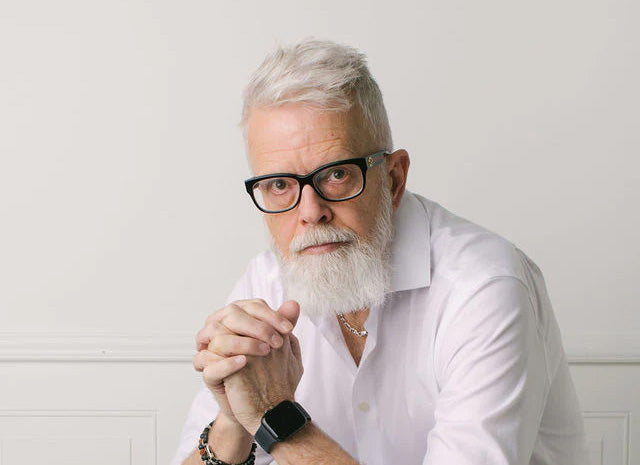
I'm David, aka NakedPastor. I've been blogging about spirituality, deconstruction, and religious freedom since 2006.
I'm an ex-pastor turned full-time artist. You can check out my cartoons, paintings, and merch in the NakedPastor Shop.
If you like The NakedJournal, you'll enjoy my weekly newsletter about deconstruction, freedom, and life in general.

This drawing is inspired by the Ouroboros Snake... of the snake eating its own tail.

What came first? The chicken or the egg? What came first? The thug or the theology? I read Tony Jones' thoughts on Mark Driscoll.
Jones has always admired Driscoll, maybe envies him a little, wants the best for him, believes he can be redeemed, and suggests that things can be restored.
What I found most interesting though is that Jones believes the problem with Driscoll is theological.
That is, did Driscoll become the focus of concern because of his theology? Or was it because of his behavior?
I'm concerned that Jones' post reflects the refusal of the church to understand spiritual abuse. It neglects the pathology of its abusive leaders. I don't think this is being fair to the victims or the perpetrators of spiritual abuse. People are victims of not just a bad theology, but a pathological cruelty.
I don't think Driscoll's theology made this happen. Driscoll "embraced" his toxic version of theology because it aligned with his moral compass. It fit his personality. It worked for him to achieve his goals. Then it manifested the worst in him. Then he continued to develop his toxic theology in order to make more room for his pathological behavior. Mars Hill Church too.
Jones' sentence, "It could have happened to any of us." is true, because I believe we all participate in this dynamic. Theology is our creation. It is a reflection of our drives and desires.
Then, not satisfied to only be the product of our drives and desires, it also becomes the producer of them. Theology is a vicious cycle of our desperate need to understand and control our universe.
Step into this cycle at any point and you can see that we are both the root and fruit of our theology and pathology.
And yes, it spins out of control by manifesting itself in toxic, controlling, and abusive behavior. Nothing can be done about bad theology because of free thought and speech.
But we can do something when this manifests itself in bad behavior. Cruel theology is a nuisance. Cruel behavior is unacceptable.
When Driscoll thinks bully to his people, we can say please stop. But when he actually bullies people, we can step in and say you will stop now!
I don't think this is a theological issue. I think it is a pathological one. Not just for Driscoll and Jones, but for the entire church.
If we would be healed, our theology would take care of itself.





1080 comments
Thank you, Mike Clawson. Yes, there were a few like Andrew Jones, Mark Ostreicher, Dan Kimball, Jenell Paris and yourself who were kind, caring and compassionate. As Jenell detailed above in her post when she did confront she was attacked. So, I don’t think any help could have been done except by the inner circle and they either failed or were unwilling. If I missed anyone else, I am sorry. I don’t think there were or are ears willing to hear at that point or this, anyway, but I really do appreciate you sharing this and Alex if you would like to talk to me personally, I am very open to that and I will answer all of your questions.
@Tim (October 3, 2014 at 12:09 pm). It sounds like I didn’t communicate as clearly as hoped … sorry. I was trying to give what I perceive an internal script would be like for what I gather the overall storyline was in how the spiritual/legal marriage issues went down, as best I could track them, and how LGBT communities were brought into it. And also a whole lot of other things about ministers officiating weddings, and etc etc.
My core point is that all kinds of people, symbols, and things got co-opted to legitimize the (apparent) storyline. The legal wife, the spiritual wife, the LGBT community, ministers performing wedding ceremonies, churches using their facilities for weddings, the Bible/bible … anything to make an emotionally compelling sob story for the story-tellers.
And to respond some to your take on what I said and what @kate willette (October 3, 2014 at 12:54 pm) said, FWIW, here’s the thinking behind how I’ve developed my own theology. It sifts out into four arenas: personal morality, wisdom decisions, social ethics, mystery/paradoxes of the faith.
For me, personal morality and social ethics are the things I understand God wants me either to do, or not to do. Failure to follow is sin/evil. [Sidenote: Best description of “evil” I ever heard came from a 5-year-old who was asked the difference between sin and evil. She said, “Evil is when you’re doin’ something that looks good, but you’re thinkin’ something bad.”]
Wisdom decisions are where there is no clear mandate and so I’m free to discern and decide for myself what to do. These end up being about wise/not so wise — not right/wrong, righteous/sinful-evil.
Mysteries are those things we reflect on that are multi-leveled with no easy answer but more insight found in the realm of analogy. Jesus being God and human. We being both sinners and saints. Christians as members of the Body of Christ and also simultaneously being members of society, with obligations in both. Split any such paradox, and troubles ensue.
I don’t think of these as four separate codex stones, but four items on a wire mobile, seeking to keep them in balance and if you switch the elements around or drop one or more off, the whole thing goes off.
Actually, I think everyone in every culture in every era is “wired” by God’s design to seek a workable system for understanding the world around us and interpreting our experiences in it. I feel drawn to fill in where there are gaps in my paradigm, and file off what turns out to be excesses. If that’s looking for a perfect system, I don’t know that it’s all that different from what anyone else does.
But I don’t believe there’s an “inerrant theology” — and that’s a major trap that I see a lot of Christian leaders fall into. Hence, making the bible conform to their personal norms.
And I don’t think any individual can apply the Bible perfectly — each of us needs community precisely so that our unique front-on perceptions help cover the blind spots and peripheral vision distortions of others.
And no one community gets it on their own perfectly either.
We really do need each other …
Greetings all,
Just dropping in here to offer Julie an apology. I was the cohort leader who shared her email from 2008 with Alex. He emailed me this morning to let me know that he had brought it up here and that he had mentioned my involvement with it. I just want to let you know that I am very sorry for passing it around. It was not my place to share it with others and for that I am sincerely sorry.
I hope you will understand that I have always been concerned for you and your situation and thus my decision to share the email with Alex when he asked me what I knew (around 5 years ago now) was purely in the interest of keeping everything about the situation out in the open and not look as if I was trying to cover up any dirty laundry or protect Tony in any way. I’m sorry if that was a breach of your trust, but at the time I genuinely thought it was the best way to serve you – by not hiding anything I knew from anyone who asked. I want you to know that I have never personally witnessed any campaign by emergent folks to silence you or label you as crazy, nor would I have participated or supported it if I had.
If you recall, Julie, even though we had never met, I did reply to that email of yours with compassion and concern, though I wasn’t sure what I could do for you since I wasn’t part of any Emergent inner circles and had only even met Tony a few times myself. I did email Tony too at the time to encourage him to do whatever was necessary to reconcile with you, including canceling the book tour and stepping down from Emergent Village. I haven’t had time to read through the hundreds of comments here, but from what I have gleaned from the little bits I’ve skimmed, I have to say that I’m sorry I didn’t follow up on that any further at the time, as it seems to have turned out very badly for you. Though like I said, not having a relationship with you or with Tony, nor being in the inner circles of Emergent at the time, I’m not really sure what else I could have done then. Regardless, I am sorry for not pursuing it further or helping you more. Please forgive me for anything I may have unintentionally done to make things harder for you.
Regards,
Mike
Rob (October 3, 2014 at 11:55 am) said “@brad/futuristguy, thanks for responding […] Bu my question remains: why are so many taken in by this? Why don’t more people speak up and shine a light on this blatant heresy? What a sad indictment of the spiritual maturity (or lack thereof) of vast numbers of western Christians.”
Yup, I didn’t really get to that part. Sorry. Some things did cross my mind but didn’t jump the gap to the keyboard. Let me try to recapture some of that, reel it in, get it down.
It’s no one single thing, but I suspect a combination of influences in the entire social system that Emergentism became, plus individual influences.
I think the basic systems problem is that once everything’s open to deconstruction, well, everything is open. [If you’re familiar with Myers-Briggs Temperament Indicator, it’s the difference between “J” judging, being closure-oriented versus “P” perceiving, being open-ended.] Which means that potentially anything else can show up to fill in the gap.
In the case of the Emergent movement, I wonder if some of the additional cognitive dissonance comes from it moving away from Young Leaders, which (in my understanding) was primarily a group that was evangelical and relatively conservative theologically, and moving toward progressive Emergentism.
How much of what happened is parallel to the modernist split between liberal and conservative that occurred from about 1880-1920? One of the biggest fallouts (to oversimplify) then was that conservatives cared about personal morality and not involvement in social ethics/issues of evil, while liberals cared about social ethics/issues but were seen as lax about morality.
Only this was the postmodernist split — including New Calvinism hyper-authoritarianism from Emergent Village progressivism. Could it be that while Emergentism moved ever farther away from conventional theological roots, maybe it still needed to be “seen as” hook in with some kind of biblical base? Not foundationalism with a rigid set of doctrines and closure-oriented (i.e., who’s in/who’s out), but a centered-set gathering around common interests with a generous orthodoxy and open-ended (i.e., come dialog as much as you’d like).
Who was publishing E.V. stuff back then? Baker Book House was a major one. Were they known for deconstruction in the mid-2000s? Or as theologically open-ended? Or … We could find out the other publishers, events, etc., and see whether their paradigm is more judging or perceiving. Anyway, start looking at where things were pulling away from the established speaking-publishing-events system, and you start seeing a new interlocking directory for “non-traditionals” emerging to take its place. JoPa Productions. Jericho Books. CANA Initiative. etc.
Anyway, those were some of the bigger-picture possibilities that were flowing through my mind. They deal more with issues like group solidarity, maybe financial benefits of holding to the new party line, passionate commitment to a movement to the point of overlooking aberrancy in the chaos that typically accompanies emergence.
Also, on the theological level, I’m not exactly convinced that endless deconstruction gives you the base for discernment — in fact, never landing and reconstructing means your systems are always in flux. And it surely seems that discernment got lost along the way on this issue of spiritual/legal marriage. And if it happened with influential people/celebrities, that gets transferred along to consumers. And if Emergentism truly had become a celebrity culture, then that replication makes sense. People bought into the storyline (personal and doctrinal) and reflected it back.
But there were also potentially smaller-scale, more personal kinds of possibilities for why people often don’t speak up (or do, but get quickly silenced) about what seems clearly off-base.
When “The Sympathy Card” gets played, there’s a tendency to silence anyone who blurts out, “Hey, whaddyuh mean by this [executive elders / troublesome congregants / spiritual wife/legal wife] stuff?” Shhh … can’t you see he’s needing his rest. He’s all burned out from having to deal with [the elders / the congregation / the wench]. Have you no compassion for his nerves? Emo trumps oh-no. When “The Generous Friend Card” gets played with “The Freedom of Conscience Card,” it’s like, “Well, it’s not something I’d believe/do, and I suggested to them that it wasn’t really wise, but you know, everyone’s got to decide for themselves.” The sort of pseudo-libertarian individual freedom of choice that is answerable to no one approach. Makes each person autonomous and leaves God as an/the authority out of the picture. Not thinking through unintended consequences and how bad actions lead to damaging others. Maybe that has something to do with object relations theory? [Anyone?]So, such as they are, there they are.
I don’t want this to be lost, because it feels close to the heart of things:
" . . .it looks like anything goes when an entire movement has seemingly so deconstructed its theology that there is no God-grounded authority left. Then the Bible is no longer our guide-source, the bible is just our bitch."
The bible as a guide-source has never really worked for me, in spite of an entire childhood under Catholic authority and 25 years of my adulthood inside a liberal congregation. I mean, it’s okay and even lovely in a few passages, but not more so than other poetry and literature.
And it’s been obvious to me for some time that once you give up the “Literal Word of God” trope, it’s going to be pretty tough to have the bible be anything BUT your bitch. Meaning, you’re going to use it for what your situation and personality requires if you use it at all. (Of course, that’s exactly what the “Literal Word of God” folks are doing, too, but they carry the burden of having to reconcile all those unfortunate lines about slaves, murder, rape, and so on with spiritual wholeness.)
One of the things I’m taking away from this epic conversation is the level of personal damage that can be inflicted when people start making their living by making the bible their bitch.