Join our Newsletter
If you like The NakedJournal, you'll enjoy my weekly newsletter about deconstruction, freedom, and life in general.

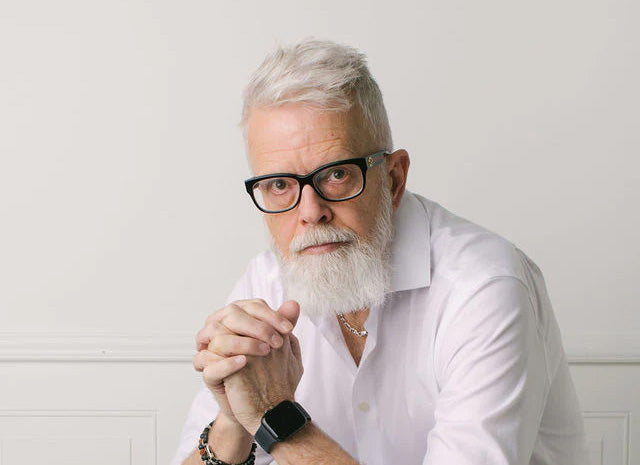
I'm David, aka NakedPastor. I've been blogging about spirituality, deconstruction, and religious freedom since 2006.
I'm an ex-pastor turned full-time artist. You can check out my cartoons, paintings, and merch in the NakedPastor Shop.
If you like The NakedJournal, you'll enjoy my weekly newsletter about deconstruction, freedom, and life in general.

This drawing is inspired by the Ouroboros Snake... of the snake eating its own tail.

What came first? The chicken or the egg? What came first? The thug or the theology? I read Tony Jones' thoughts on Mark Driscoll.
Jones has always admired Driscoll, maybe envies him a little, wants the best for him, believes he can be redeemed, and suggests that things can be restored.
What I found most interesting though is that Jones believes the problem with Driscoll is theological.
That is, did Driscoll become the focus of concern because of his theology? Or was it because of his behavior?
I'm concerned that Jones' post reflects the refusal of the church to understand spiritual abuse. It neglects the pathology of its abusive leaders. I don't think this is being fair to the victims or the perpetrators of spiritual abuse. People are victims of not just a bad theology, but a pathological cruelty.
I don't think Driscoll's theology made this happen. Driscoll "embraced" his toxic version of theology because it aligned with his moral compass. It fit his personality. It worked for him to achieve his goals. Then it manifested the worst in him. Then he continued to develop his toxic theology in order to make more room for his pathological behavior. Mars Hill Church too.
Jones' sentence, "It could have happened to any of us." is true, because I believe we all participate in this dynamic. Theology is our creation. It is a reflection of our drives and desires.
Then, not satisfied to only be the product of our drives and desires, it also becomes the producer of them. Theology is a vicious cycle of our desperate need to understand and control our universe.
Step into this cycle at any point and you can see that we are both the root and fruit of our theology and pathology.
And yes, it spins out of control by manifesting itself in toxic, controlling, and abusive behavior. Nothing can be done about bad theology because of free thought and speech.
But we can do something when this manifests itself in bad behavior. Cruel theology is a nuisance. Cruel behavior is unacceptable.
When Driscoll thinks bully to his people, we can say please stop. But when he actually bullies people, we can step in and say you will stop now!
I don't think this is a theological issue. I think it is a pathological one. Not just for Driscoll and Jones, but for the entire church.
If we would be healed, our theology would take care of itself.





1080 comments
Taylor Joy Young,
I have been accused (and yes, accused is the right word) multiple times of having a personality disorder (despite a complete lack of any diagnosis), by people who were completely unqualified. It’s an unpleasant process every time.
I understand your passion to protect and care for people, and I’m going to assume that you’re speaking in good faith.
But we don’t need a witch hunt, or even a surgical removal of the people with genuine, severe, unmanaged personality disorders. (Some of your metaphors might suggest these responses.)
Can I suggest instead:
If a person has any kind of issues that prevent them from caring for people (or lead them to damage people), they must be removed from leadership (broadly construed) as a way of caring for them. (This isn’t a punishment.) The scriptures are pretty clear that family issues fall within this category, as do sustained personality issues.
They should be encouraged to continue to attend church, again as a way of caring for them.
They should be encouraged to seek appropriate help (diagnosis, professional assistance) as needed, as a way of caring for them.
There must then be a period of reflection for the person and the church. Years, perhaps. (A year, at least!)
Then, there can be moves to verify the management of the person’s condition, and work out if it could be managed in a church leadership context, and, if so, whether the church is willing to do so. Many churches will, wisely, choose not to go there.
Of course, we would all hope that it would never come to this – that people would (be encouraged to) seek help early and often. But this is clearly not the case.
I think you’re right though: you don’t love anyone by ignoring the fact that leaders are hurting people. (You’d think the church would have worked that out by now…)
For the “pastor” who said this was a private family matter, let me educate you.
“Cluster B” personality disorders, including narcisissm, borderline, histrionic, and anti-social, make up NINE PERCENT of the population.
Dang, that’s a lot of people. But let’s get specific.
The current population of the US, according to our friend Google, is 317 million people.
At 9%, that means roughly 28 million people have these relationship-destroying disorders.
Now, if every single one of these people have
-2 parents
-1 child
-1 relationship partner (ever!)
-1 boss
-1 close friend
-1 co-worker
Then that means 199 million people in the US have a CLOSE or DAILY RELATIONSHIP with someone who has a personality disorder!!!
This is not a private family matter!!! This is a freaking cancer that destroys our lives, infests our churches, and lies to people about the very nature of God!!! ROOT THAT STUFF OUT, and find a way to communicate w/ the church laity about it—-or face the consequences.
Like this thread.
Brad, It was an emerging ministry thing. I had 3 of my kids with me and could only pop in and out of meetings. I don’t remember the culture clash thing, but then there may have been a part we didn’t stay for. I do remember about 5 groups creating a worship space, 5 different rooms, and inviting the public in to go through it all. That’s the one I was a part of. I don’t really remember you at all, or anyone particularly from that time. I just remember your name, and I’ve heard it a lot since.
Gosh, Donna, I’m so sorry you went through that. You and Julie must be made of iron. I’m so so SO sorry that people claiming to represent someone noble and kind (Jesus) treated you worse than shit :(
Sorry — had to be out a lot of yesterday and for the upcoming week, and just starting to do catch-up stuff.
@Donna – Hello (again) as we may indeed have met, as I was in Austin several times between about 2000 and 2003 for trainings. (see below.) I read just the beginning of your post and thought I should clear up confusion about identity.
Brad Sargent = brad/futuristguy = me. I started blogging in 2003 and have pretty much used the brad/futuristguy handle for most online stuff as “futuristguy” has been my blog name since about 2004 or so. While it may be confusing sometimes for others, it’s also been helpful for me to relocate comments I’ve made, scattered across various blogs. Anyway, hopefully that clears up that mystery.
Glad that some of what I’ve written has been of help. Some back story on my perspective about abuse. I survived a very nasty church split/takeover when I was 23 and it was a crisis of faith moment. Back then, I couldn’t find ANY Christian books on spiritual abuse — the first main ones (like The Subtle Power of Spiritual Abuse and Toxic Faith) wouldn’t even be published until a dozen years later. So pretty much all I had to sort things out were the Scriptures, a few friends to talk with (many were traumatized by the split and would get freaked out, so we didn’t talk much), and trying to follow the leading of the Spirit to learn and discern. Survived it, but it was rough. So that’s part of the “well of wounds” that hopefully has led to something redemptive, and why I’m particularly passionate about creating system resources to help move toward healthiness and sustainability.
Back to Austin: I remember a few details of events from back then, but these days the connections between names and faces escape me. Anyway, do any of these sound familiar? In about 2000/2001 I was in Austin to dialogue about emerging ministry, and facilitate a “culture clash” simulation game based on values and beliefs of people from the kinds of “postmodern cultures” that I’d been interacting with since the early 1990s. And then maybe a year or so later to do a session on learning styles and how to use the different ways God “wired” us to create stronger teams for doing cultural field work for missional stuff and/or church plants. And then the intergenerational WabiSabi forum in early 2003.
Will plan to read your post, Donna, and catch up with other most recent comments soon as I can.