Join our Newsletter
If you like The NakedJournal, you'll enjoy my weekly newsletter about deconstruction, freedom, and life in general.
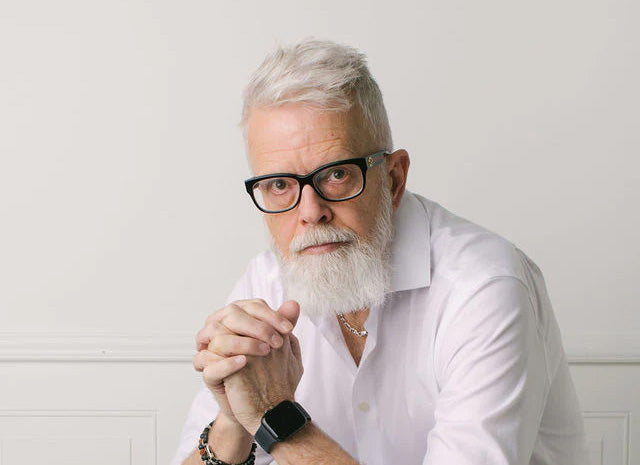
I'm David, aka NakedPastor. I've been blogging about spirituality, deconstruction, and religious freedom since 2006.
I'm an ex-pastor turned full-time artist. You can check out my cartoons, paintings, and merch in the NakedPastor Shop.
If you like The NakedJournal, you'll enjoy my weekly newsletter about deconstruction, freedom, and life in general.

This drawing is inspired by the Ouroboros Snake... of the snake eating its own tail.

What came first? The chicken or the egg? What came first? The thug or the theology? I read Tony Jones' thoughts on Mark Driscoll.
Jones has always admired Driscoll, maybe envies him a little, wants the best for him, believes he can be redeemed, and suggests that things can be restored.
What I found most interesting though is that Jones believes the problem with Driscoll is theological.
That is, did Driscoll become the focus of concern because of his theology? Or was it because of his behavior?
I'm concerned that Jones' post reflects the refusal of the church to understand spiritual abuse. It neglects the pathology of its abusive leaders. I don't think this is being fair to the victims or the perpetrators of spiritual abuse. People are victims of not just a bad theology, but a pathological cruelty.
I don't think Driscoll's theology made this happen. Driscoll "embraced" his toxic version of theology because it aligned with his moral compass. It fit his personality. It worked for him to achieve his goals. Then it manifested the worst in him. Then he continued to develop his toxic theology in order to make more room for his pathological behavior. Mars Hill Church too.
Jones' sentence, "It could have happened to any of us." is true, because I believe we all participate in this dynamic. Theology is our creation. It is a reflection of our drives and desires.
Then, not satisfied to only be the product of our drives and desires, it also becomes the producer of them. Theology is a vicious cycle of our desperate need to understand and control our universe.
Step into this cycle at any point and you can see that we are both the root and fruit of our theology and pathology.
And yes, it spins out of control by manifesting itself in toxic, controlling, and abusive behavior. Nothing can be done about bad theology because of free thought and speech.
But we can do something when this manifests itself in bad behavior. Cruel theology is a nuisance. Cruel behavior is unacceptable.
When Driscoll thinks bully to his people, we can say please stop. But when he actually bullies people, we can step in and say you will stop now!
I don't think this is a theological issue. I think it is a pathological one. Not just for Driscoll and Jones, but for the entire church.
If we would be healed, our theology would take care of itself.





1080 comments
@bill and @david: thank you. Your words mean a lot.
@julie: my thanks to you open up a world of emotions for me. Thank you.
To all who contributed to this thread, including those of you who pissed me off, thank you. This conversation is important and the ones whom ignored it, denied it viability and dismissed it have shown disregard for the concept of “the conversation”. The marginalized spend their lives living under the thumb of the rules of the privileged. People want to be heard and when they are hurt and ignored, they scream and yell. It would behoove you to listen.
Please please please do not let this end when this thread is no longer shiny and hip.
From Rachel Held Evans (the full article is posted above by Becky Garrison @6:10 PM today.
1. We must educate Christians about abuse, bullying, and misuse of power in church settings.
2. We must value and preserve accountability
3. We must take misogyny and homophobia seriously.
4. We must measure “success” by fruit of the Spirit, not numbers.
5. We must protect people over reputations.
6. We must treat our pastors and church leaders as human beings—flawed, complex, and beloved by God.
don’t know who this guy is or if he’s credible or what but a quick Google search brought me to this:
http://www.samstorms.com/enjoying-god-blog/post/pastoral-bullies
It’s really helpful because I actually think the most common form of pastoral abuse is the more insidious “bully.” All of these describe my experience.
don’t know who this guy is or if he’s credible or what but a quick Google search brought met to this:
http://www.samstorms.com/enjoying-god-blog/post/pastoral-bullies
It’s really helpful because I actually think the most common form of pastoral abuse is the more insidious “bully.” All of these describe my experience.
kate, my healthiest church experiences were the ones where we all said goodbye. My unhealthiest were the ones where people didn’t know why I’d left (or even , in some cases, that I’d left!)
However, in some of those cases, I couldn’t even articulate why I was leaving – I just knew I needed to get out!