
The Naked Journal
Thoughts, musings, and meanings behind NakedPastor Art.
The Naked Journal

10 Questions You Can Ask A Church To See If It's Spiritually Abusive
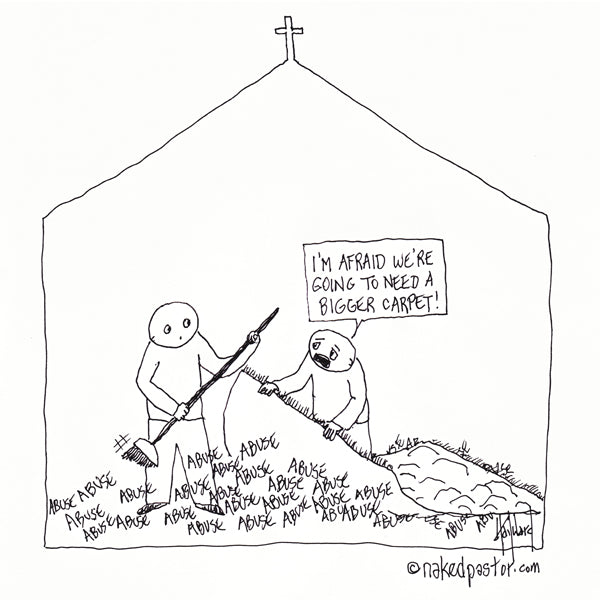
What is Spiritual Abuse? Spiritual abuse is when religious or spiritual beliefs are used to harm, control, or manipulate individuals. It involves the misuse of power by religious leaders or groups, often causing emotional, psychological, or physical harm to people by imposing strict rules, guilt, fear, or shame. Why Do We Need To Talk About Spiritual Abuse? I think it is important for churches to establish rules concerning how it treats its members. In any relationship, those involved need to constantly ensure that they are treating the other fairly, compassionately, and justly. This includes churches. Please. I've come to believe that all churches are prone to spiritual abuse. In fact, I claim that the dehumanization of people is the gravitational pull of all institutions and organizations. So we must be always on guard to ensure that they resist this tendency. It takes a lot of diligence, honesty, and hard work. 10 Questions You Can Ask A Church To See If It's Spiritually Abusive I've assembled 10 questions you can use as a spiritual abuse test to see if a church is spiritually abusive or not. If any of these apply, I would claim that this particular church is not a healthy one and should be avoided. 1. Does it use guilt, shame, or fear to motivate me? Everyone should know by now that although guilt, shame, and fear can motivate people, we also know that it is not the best motivator for human behaviour. True, to use any of these to prevent a person from harming another, for example, works at the time. But to motivate others to do good in the world, the motivators should be good too. 2. Does it elevate its wellbeing over mine? When the organization is more important than the people who belong to it, then then people will suffer. This is a very real dilemma for churches, because the number one mission of an organization is to survive… just like people! But the people should always come first. 3. Does it employ peer-pressure to make me behave a certain way? I believe diversity makes the healthiest communities. Unfortunately, most organizations prefer homogeneity. Conformity to its desired standard is expected of all its members. This will crush your individuality, authenticity, and self-expression. 4. Does it believe it possesses the truth and I don’t? This is what makes a cult a cult. When any person or organization claims to have the truth and therefore you need them, this demands that you become a mindless sheep, an obedient follower, and a silent recruit. 5. Does it speak to me before it listens to me? If any person or organization doesn’t listen to you and your needs and desires, its because it is not interested in them. In fact, they will inform you of what you need and want. As a result, you will have to hide your true self in order to belong. 6. Does it try to distance me from my other relationships? Setting oneself apart often turns into separating oneself from all outside influences. At first, it may appear that you are just caught up in the excitement of the community. But over time you realize that you no longer have any contact with people who loved you. Isolation is a key strategy of abusers. 7. Does it punish me with demotion, isolation, or silent-treatment if I question anything? Questioning authority is hardly ever appreciated by authority. But in order for you to be free, it must be done. If you raise legitimate questions and there are negative repercussions, this is abuse. 8. Does it trivialize or dismiss my feelings? Your feelings don’t matter in an abusive relationship. In fact, your feelings can get in the way of the church’s agenda. In abusive relationships, we are taught to distrust our feelings and blindly trust the ones in authority over us. 9. Does it get jealous if I seek spiritual aids elsewhere? Abusers are very jealous. They don’t want you going anywhere else for anything. In fact, they claim they will meet all your needs. This is another form of isolation. Abusers want you all for themselves. 10. Does it always blame me when something goes wrong? If anything bad happens, it’s always your fault. Either you as an individual or the people as the community. Never the leader’s! And because our self-esteem has been so eroded over time, we believe them and accept all blame for anything bad that happens. You know you can take these same spiritual abuse test and apply them to any relationship. Even your marriage, family, or friendship! For example, "Does he use guilt, shame, and fear to motivate me?” "Does he trivialize or dismiss my feelings?" If you can answer yes to any of these questions, then there’s a high probability that it is abusive. If all 10 can be answered with yes, then run. Resources on Spiritual Abuse Here are a list of other blog posts I've written on Spiritual Abuse. 10 Reasons Why The Church Is The Perfect Culture For Abuse 5 Steps to Recover from Spiritual Abuse What is Religious Trauma and How To Recognize It?
Read moreHow to Recognize and Respond to Controlling Leaders in Churches
Have You Experienced a Controlling Leader? Many of us have encountered controlling church leaders. It’s one of the most telling signs of a controlling church, and pastors, unfortunately, can often be the worst offenders. These leaders use their spiritual authority to dominate and manipulate, disguising their actions as being for your own good. When I first encountered controlling leaders, I was so enchanted by them that I didn’t mind. “Enchanted” is the key word because it felt like I was spellbound and captivated. I didn’t realize what was happening until the veil was lifted, and I saw the truth. That moment of clarity was painful—I realized I had sacrificed myself on the altar of their power. I felt betrayed and disillusioned by the very people I trusted most. When I naively thought I could address these issues, it didn’t go well. Things always escalated quickly, but in hindsight, leaving those situations was better for me. Many of you reading this probably have similar stories. If you do, you’re not alone. Be Careful Challenging Controlling Leaders If you’ve ever considered challenging a controlling leader, here’s a word of caution: proceed carefully. Whether you’re on the leadership team, a staff member, or a congregant, confronting a controlling leader, especially in environments where spiritual abuse thrives, can have serious consequences. In my experience, challenging their authority often leads to termination or immense pressure to leave. This has happened to me multiple times. Whenever I brought up concerns about leaders being too controlling, it didn’t end well for me. You might think it’s my fault, and I’ll own my part, but the pattern remained: speaking up led to being pushed out. Here’s how I used to think: “I’m part of the team. Obviously, we all want the team to succeed. Constructive criticism should make us better, right? By addressing this leader’s micromanaging tendencies, I’ll help our community thrive. Surely, they’ll appreciate my input.” Wrong. Controlling leaders love being in control and are unwilling to relinquish it. That’s why they’re in those positions. They don’t see challenges as opportunities for growth but as threats to their authority. To better understand their behavior, read Understanding Narcissistic Pastors. What to Do If You Encounter a Controlling Leader If you find yourself dealing with a controlling leader, keep these tips in mind: Recognize the Signs Early: Controlling leaders often disguise their behavior as care or concern. Pay attention to patterns of micromanagement, manipulation, or power hoarding. 8 Warning Signs You're in a Controlling Church can help you identify these patterns. Protect Yourself: Before confronting them, consider the potential consequences. Ensure you have a plan in place if things don’t go well. Find Support: Connect with others who understand your situation. Whether it’s trusted friends, family, or a supportive community, having allies can make a big difference. Know When to Walk Away: Sometimes, the best decision is to leave. Staying in a toxic environment can harm your mental, emotional, and spiritual well-being leading to lasting religious trauma. Learn from the Experience: Reflect on what happened and how you can grow. Use these lessons to recognize and avoid similar situations in the future. You’re Not Alone If you’ve experienced this, know you’re not alone. Many people have faced similar situations, and sharing your story can be a powerful way to heal and help others. Remember, your well-being matters, and you deserve to be part of a community that uplifts and respects you.
Read more
The Journey of Leaving Church Or A Cult
The Journey of Leaving Church Or A Cult This is my "Souls Back" cartoon. How many of us sacrificed our own souls to belong to a toxic community? (Click on image for a digital download of it.) Lots of people are leaving the church. For most, it's no big deal. But for some, it's huge. It's traumatic. It's life-changing. What's the difference? For some, church was an activity. For others, church was their life. For some, church was just a meeting. For others, church was like a cult. Even though I wasn't in a cult, I feel like I was. Do you know what I mean? Most of us know the signs of a cult. Here are 9. 9 Signs Of A Cult one charismatic leader overpowering herd mentality use of guilt and shame to compel conformity insists that this community is the right or best one claims special knowledge independent thought is discouraged elevates the community and its leader above friends and family demands lots of time and money to reach the next goal leaving is not an option So, even though I could say that all those signs could apply to some degree in my Christian journey, I still say I was never a part of a cult. But is that really true? Because if all the signs are there, then why wasn't it a cult? Look at the advice given on how to leave a cult, and it only makes me question even more. 9 Steps For Leaving a Cult Recognize that you're in an abusive religious group List the reasons why you want to leave the group Plan your escape Have a place to stay in advance Leave Be prepared for fierce judgement and attempts to retrieve you Remain strong in your convictions Seek support from other people Continue journeying Well, these also apply to my life! What does this mean? If the signs that I was in a cult and the ways to leave a cult both apply, then was I in a cult or not? I still don't think so. For me, it simply means admitting that the kind of churches I found myself in embraced¬†cult-like values. I've come to the conclusion that my desire and willingness to serve and be a part of a community found a perfect home in the kind of churches I gravitated to. I did it because I wanted a strong mentor and a vital community. The price was surrendering my spiritual independence. Now, I claim that any religion, any group, any relationship, any job‚ anything‚ can possess cult-like qualities. Remember the movie, "The Firm"? That law firm clearly had cult-like qualities, and she began getting clues that it was when she was told, "The Firm encourages children", even exercising dominion over her reproductive rights. For some of you it understandably takes a long time to get over changing your beliefs, leaving the church, or even rejecting your inherited beliefs. You're finding it more difficult than you imagined it would be. It's taking longer than you thought it would. You are feeling afraid of the unpredictable and unpleasant emotions you're feeling as you try to move on. Believe me, I get it! Now maybe we know why: leaving a cult or cult-like communities and relationships can take a long time to process. But you're doing it! Be patient with yourself. One day you will not only know you are free, but you will feel free too!
Read more
How Disappointment Is Used To Control People
Our pastor is the kindest man you could ever meet. And in my opinion he's the best pastor in the world. He works hard to make us better Christians. He says he works 24/7 and I believe him. How does he get a break when he's basically on call all the time? And it's all for his people. He sacrifices himself for us. Not everyone appreciates what he's got going here. I once brought a friend to a service and he said that he didn't like how he yelled and screamed and turned red and sweated when he preached. He thought he was a control freak and found it all too. Triggering. Whatever that means. He said it was spiritual abuse. Whatever that is. He has no idea because he doesn't know our pastor like we know him. He really loves us and wants the best for us. He's just like a good father who spanks his children... it hurts him more than it hurts us. Even though it really does hurt, he reminds us that it was we who broke his heart and therefore God's heart and we had no idea how much pain and sorrow we caused. I'd hoped that my friend would be moved to repentance too but instead he hardened his heart even further. His blindness shocked me. I should have listened to my pastor long ago when he said he's not good for me. Now I'm ashamed to say I believe him. I repented to him for waiting until I had proof my friend was a bad influence before breaking fellowship with him. I never learn. Which is why we absolutely need him. He reminds us we are wayward sheep so we must be contrite and should not delay. Jesus could come back any day now so we need to be ready. This is why he fires both barrels when he teaches us. We are in peril and there's no time to lose. I say bring it on! He makes us faithful and obedient. Isn't that what we want? Isn't that the goal? I mean, look at the results! The church is doing great because everyone gives above and beyond their regular tithes and offerings. He makes us give generously. As we should! I'm glad he does because otherwise I would keep what belongs to the Lord and hinder God's blessings. Plus, we all work hard. There's no lack of volunteers for Sunday School teachers and greeters and women working in the kitchen at the potlucks and other events and men maintaining the building and going over to renovate his house and even the youth are constantly out canvasing the neighborhood to witness to people and invite them to church. Everything runs smoothly because he makes sure they do. Now that's a good leader! No, he's not a taskmaster. He's just not! He doesn't have a gun to my head forcing me to do things against my will. Just because we do everything that's expected, as we should, it doesn't mean it isn't voluntary. No, he pleads with us until he breaks our stubborn wills so that we actually want to do what he tells us. As he should, he makes us ashamed of our sinfulness and stubbornness and laziness which is a good thing because it drives us to repentance for our evil ways. As we should. He loves us all so much and cares for us so much that it would break his heart if we didn't repent and do what he guides us to do. We know he loves us because he tells us he does. So we do exactly what he guides us to do because it makes him happy which makes God happy. Which is what we must want. I mean, isn't this how you parent? If I get angry with my kids they just wait 'til it blows over. But if I look really sad and hurt and show how much they've disappointed me and how they basically spat on my expectations and how they've crushed my dreams and wounded my soul‚ well that just kills them and sometimes even makes them cry. As it should. Speaking of crying, this reminds me. Just last Sunday our pastor cried in front of everybody. That's right! He cried! A man! Why? Because he heard some people in the church were talking about how controlling he was and it just tore him apart. Why would they do that to him? He did nothing to deserve that. I confess, it made me angry that such ungrateful people would hurt his feelings. So he invited people, with tears, that if they didn't like it here they were free to leave. So leave now! Nobody left. We all stayed. Because whiners and complainers are cowards who resent being told what's good for them! After his passionate sermon, where he preached about how their pastor Moses was on the holy mountain with God but the Israelites made the golden calf and caroused in sin and then were destroyed for their rebellion when Moses came down and caught them, we all went up to the front where he beseeched us to humbly get on our knees before him as a gesture of submission to God and repent of our rebellion and to renew our vows to serve the church wholeheartedly and without question and to totally trust the leader that God had assigned us. Every single one of us did it. We all cried! We didn't hear of any complaints after that. Listen‚ I know how stubborn and sinful I am. I'm deeply flawed and broken. He reminds us of that every single week and at every single meeting. As he should. And I don't want to fool around with that. I'm so ashamed of my sinfulness. As I should be. I should be more serious about my faith. So I really appreciate him motivating me week after week to live up to his expectations of me. After all, he knows best! I mean, isn't this why God gives us pastors‚ because we are hopelessly lost and need divine direction? We can't hear God's voice like he does. He's the one who got all the education, training, and experience to be my spiritual father. I need him to have authority over my unruly heart. I need him to raise his voice to get my attention. I need him to compel me to do what he knows I should do. I need him to make me a perfect vessel of God's will, which is what I should desire with all my heart, soul, and mind. Because he loves me. I absolutely know he does! Or he wouldn't care about every single little detail of my life! Right? I mean, just like the Lord, nothing escapes his attention. Nor should it! We will be held accountable for every single sin, both great and small. He's so Spirit-filled that he has more zeal for my life than I do! So I'm forever indebted to him for that. As I should be. We just can't disappoint him. That would really sadden him just like it would really sadden God. And we shouldn't want that to happen.Should we!? Further Reading On Abusive Pastors Understanding Narcissistic PastorsWhen Preachers are Predators
Read more
Ten Subtle Ways You Could Be Abused
I know abuse is being discussed a lot these days. Spiritual abuse is becoming a more recognized reality even in psychology circles. Religious PTSD is a newly recognized and legitimate field of study and therapy. Some might say that I'm using the word "abuse" too liberally because they would claim that it means a cruel and violent treatment of another person. Certainly this is abuse. But abuse also means the improper use of something or someone. When we don't respect people as they are and allow them to be who they are freely, this is a more subtle form of abuse, the logical conclusion of which leads to violence against the human spirit. In fact, this problem will increase. As we become more outspoken against obvious abuse and broadcast it without restraint, abusers will go underground and become less obvious and more subtle in ways that will require a more wisdom and honesty to discern. No, we don't tape people's mouths, cuff their wrists, shackle their feet, put them on a leash, or lock them in a cage. Not literally. Rather, how do we silence people, limit their influence, constrict their involvement, prevent their movement, manage their actions, and control their lives? How do we punish people for not conforming? These are the real questions that can expose where subtle abuse is happening. I get this response from people: "It's their own fault for being abused because they stay! All they have to do is leave and it's over!" Possibly. However, this is another dilemma people face: many want to be a part of a community, especially their religious community. There are many people who long to be a part of a church. They have this right. The choice is to stay and suffer some abuse or leave and suffer profound alienation. Ask yourself these questions: What strategies are being used, consciously or unconsciously, to keep you under control? What is being done to make you conform to being a legitimate member of the community? Here are the more subtle ways you may be being abused without you even knowing it. This can occur in any relationship from a spouse and a family, to a pastor and a church, a boss and a company, a leader and a group, or people of influence and a movement. You are not allowed to speak your mind honestly and truthfully. You can only play if you meet certain expectations. You can't apologize enough. You can still give but receiving is limited. Your loss of respect in their eyes can never be remedied. You live in constant fear of an outburst of anger against you. You're allowed to live but your benefits have been severely cut. To criticize them is wrong because you criticize the ultimate good they represent. They have a network of peers that will rally around them and protect them. You're warned that your life will get drastically worse if you leave. There may never be raised fists or voices. There may never be any overt threats or ultimatums. This can all happen behind close doors or in broad daylight with nice clothes and smooth voices. In fact, some people might think you're hearing and seeing things and maybe a little crazy and unwell. I always encourage people in such situations to trust their gut. Test it. Push that button a little harder or once more and see if it becomes more obvious and reveals its true abusive nature. I've heard many times that it is naive to expect a community to exist without controls. There is a sensitive dance between personal freedom and corporate responsibility. But I claim we have opted for subtler forms of crowd control at the grave expense of providing spaces for personal freedom. I've also heard that I'm being petty to critique so harshly. I'm encouraged to give people, particularly leaders, a break. I'm often reminded that I'm being merciless and trivial, and that I'm revealing my own resentment at not belonging the way I'd like to belong. I'm told I'm angry and throwing stones at a house and people I willingly abandoned and that I need to grow up, return penitent, or finally leave and shut up. But what if I believe in the value of community and want people to build, facilitate, and be a part of them in healthy ways? Find or build a healthy community starting with your healthy self. Until then, it is necessary to leave these kind of codependent and toxic relationships and systems. Yes, we will experience a period of alienation. But I'm convinced that over time we will find nomadic comrades who have suffered the same kind of abuse and rejection. We will discover that we are a part of a new tribe that accepts us as we are and gives us freedom to express it. Together we will withstand the powers that have cast us off and rescue others from them. We will be like a band of sojourners and prophets who live in the desert threatening the authorities that tried to control us.
Read more
Does the Mormon Church Bully People?
Does the Mormon Church Bully People? I often get emails and messages from people who have left or are still in the Mormon Church, The Church of Jesus Christ of Latter-day Saints. I'm frequently reminded that, apparently, there are many Mormons, and many in Utah, who follow my blog, read my posts, and appreciate my cartoons. Anonymously. Yes. (Click on the cartoon Mormon Bully for a digital download of it.) Those who have the nerve to contact me tell me that they have to keep this a secret because if it was ever discovered that they were critical of the Mormon Church, they would suffer dearly for it. This is not uncommon for many Christians in many churches other than Mormon. An ex-Mormon (which I'm learning is something very difficult to become) contacted me and asked if I could do a cartoon about abuse with the Angel of Moroni on the steeple, as well as an LGBTQ person and an elderly person with a cane. I'm sending her the original drawing today. (Did you know you can commission me for a cartoon or drawing too. Just go here and choose what you want!) Lots of people in lots of churches are being bullied and controlled by those churches. Including Mormon ones.
Read more
3 Lies Your Ex (Church) Might Want You to Believe
I'm not talking about your romantic or marital ex. I'm talking about your ex-church.I'm talking about leaving the church. And I'm talking about its response to you leaving. (Click on the image for a digital download of it, or click HERE.) Now, before I begin, I want to clarify a couple of things: These can apply even in existing relationships (your partner or church now). These are not all the lies, but a few of them (there are lots of lies available). Not all ex's are like this, but enough are (enough to warrant making this list). This Is All Your Fault This is a lie your ex would like you to believe. Your falling out of love with each other and separating is all your fault! You have problems. You've got issues. You need help. This shouldn't have happened. But you made it happen. I'm totally fine, but you're definitely not. You wrecked this, and now you're going to suffer for it. One of the issues I've been thinking a lot about lately is victimhood. I think many churches nurture a victim mentality in their members. In fact, as a pastor I harbored a victim mentality because I thought it was biblical and Christ-like. So I taught it! The suffering servant idea was deeply embedded into my psyche to the point where I think it became a part of my cellular makeup. The church attracts victims and nourishes a victim mentality. Please don't get me wrong‚ there are lots of real victims. There are so many spiritual abuse and religious trauma cases that it's become a recognized field in psychotherapy. I have been a victim and so have many of you have too. But I'm talking about a victim mentality that needs and welcomes being a victim. It's taken me years to break free of this unhealthy and unnecessary mentality. It's taken me years to escape the manipulation and coercion and shame. In fact, I'm still in progress. I'm going to mention an awesome book. The most powerful autobiography I've ever read or ever will read, Life and Death in Shanghai, by Nien Cheng. She was imprisoned in China for 6 years during the Cultural Revolution. If anyone was a victim, she was. If anyone didn't have a victim mentality, she didn't. You must read it. You will get a kick out of her feistiness that alarmed the prison guards. It was reading this book years ago that alerted me to the fact that I had a victim mentality and didn't have to. It's making more sense even now. So, no, you are not to blame! And if you are, so what? Who cares? If you broke up with your church, maybe it was because you did it as a bold act of self-care! Finally! This is good. But I just want to encourage you that you are the captain of your life. You are the master of your destiny. Whether it is your fault or not, this is not the point. The point is: are you taking steps to take care of yourself? That's the point. No other. Something I've been telling myself lately: Live your life. Don't let it live you. You Can't Live Without The Church Another version of this is, "You need me!" The truth is you don't. Unhealthy relationships are often based on codependence, which is basically a fixation on meeting the needs of the other person for your own sense of self-worth. Unhealthy relationships might sound really romantic and loving when they say, "I can't live without you!" But in truth this is not healthy. It is a lie. Lisa and I had to come to the painful but liberating realization of this in our relationship. The truth is she can live without me. The truth is I can live without her. But we choose not to. It is not an unhealthy drive out of a desperate neediness to be loved. It is a choice. We choose to want each other and to make life meaningful with each other. I suppose I could even say we choose to need each other. But that's different that neediness. Understanding this has actually made our relationship richer and more meaningful. It puts the power in our own hands rather than in the fickle arms of romance or passion. Many churches teach that you cannot live without it. They actually nurture codependency in their people. They can be very possessive. The old maxim, "No salvation outside the church!" is beaten into our brains to the point where we believe it. We are convinced we absolutely need the church and will perish without it. We are terrified of life without the church. This sounds like a lot of ex's, doesn't it? But it's not true. It is a lie. But like leaving a bad relationship, sometimes it takes years to realize you are even better without it. You are healthier, happier, and more alive than ever before. And if you are still in a church, your relationship with it will be healthier if you realize that you don't need it, but choose to be in relationship with it. I hope your church feels the same way. That would be a happy relationship. You Will Never Be Loved Again In other words, your ex would like you to believe that he or she is the one and only person who can satisfy your wants and needs. They want you to believe in the magical idea that you were made for each other, that you are soul mates, and that no one else in the entire world can give you the love you need. Now, I have to admit, the idea of soul mate and made for each other and destiny all sound very appealing to me. Lisa and I fell in love as teenagers and have been together ever since. It sometimes feels like magic. But I'm not sure this is true. Lisa and I have talked about this a lot‚ like when we consider what she would do if I should die before her, and vice-versa. I say I would never find another love like her. She says the same about me. But we both know, deep down, that we are clinging to an idea that may not be true. We agree that it is entirely possible that we could fall in love again. It wouldn't be the same. It would be different. But it would still be love. It would still be meaningful. It's the same with many churches. They can be very jealous. Many churches like to believe and insist that they are the only ones, special, and that all others are superficial, fake, impostors, and mismatched. After many years in the church I just came to realize that this wasn't true. It was a lie. I wanted to be a Christian, a church-goer and even a pastor because I chose to be. I chose this and its entire package above all others. To me, this was more honest and healthy. Now, I realize that it is possible to love others and be loved by others outside of the church in different but just as meaningful ways. So you're breaking up with your church.Or your church is breaking up with you.Or it's already done. Don't believe the lies it may try to tell you... that it's all your fault and you've made a huge mistake; that you can't live a full, meaningful, and happy life without it; or that you will never be loved or love again. I know for a fact, from my own experience, that these are all lies. They are not true.
Read more
Why Your Wounds Are Yours to Share
Your wounds are yours. It doesn't matter who inflicted them, who gave them to you. They're now yours. I got some abusive emails from a pastor. I shared them with my support. He found out I shared them. He was offended that I would share his emails with people. He abused me. I showed my wounds. He felt I had no right to share what he believed wasn't mine, but his! It's like shooting someone with an arrow and coming to ask for it back. No way! It's mine now. Anne Lamott has said:" You own everything that happened to you. Tell your stories. If people wanted you to write warmly about them, they should have behaved better." Your wounds are yours. Don't be afraid of embarrassing your aggressor or abuser. They threw the ball, lobbed the missile, shot the arrow, into your body! Now it's yours. When a church and its leadership abuses you, they have given you something that is now totally yours. Share your story. It's still shocking to me when I see all the maneuvers to silence people from sharing their experiences and showing their wounds. All kinds of reasons are given like; It's embarrassing It's not helpful It will compromise the cause It's not glorifying to Christ It maligns the Church There's no corroboration It's too ugly and inappropriate It's risky for you to do so; etcetera. I do understand that sometimes it's not safe to share your wounds. I emphasize: always make sure you are safe first. Vulnerability Is Key To The Healing Journey Vulnerability can feel like exposing yourself to more harm, especially after trauma, but vulnerability is an essential step towards healing. When you share your story, you reclaim your power and begin to break down the walls that trauma has built around you. The wounds might be yours, but embracing vulnerability allows you to transform them into a source of strength. Remember, healing starts with owning your truth, even when it's hard.
Read more
Believe the Abused When They Talk About Their Experiences
When an abused person finds the courage to take the risk to tell their story of abuse, often the story is so overwhelming, bewildering, and unbelievable, that their story is not believed. People leap to the conclusion they are exaggerating their story. Maybe to evoke sympathy.Maybe to exact revenge upon the perpetrator.Maybe because they've forgotten the details.All kinds of reasons.All in an attempt to, often, silence the abuser and protect the protaganist. Here's an interesting quote: "A dispassionate conceptual development of the typology of violence must by definition ignore its traumatic impact. Yet there is a sense in which a cold analysis of violence somehow reproduces and participates in its horror. A distinction needs to be made, as well, between (factual) truth and truthfulness: what renders a report of a raped woman (or any other narrative of a trauma) truthful is its very factual unreliability, its confusion, its inconsistency. If the victim were able to report on her painful and humiliating experience in a clear manner, with all the data arranged in a consistent order, this very quality would make us suspicious of its truth." (Slavoj Žižek, Violence: Six Sideways Reflections) Horror, confusion, and inconsistency accompany these stories. It's a matter of fact. Because the horrific stories of abuse are not felt and communicated linearly, consistently, or calmly. Experts who deal with traumatized victims of abuse understand this and are able to piece together the story in a way that can be comprehended by its listeners. When people share with me their stories of abuse, I believe them. Do you?
Read more