The Naked Journal
Thoughts, musings, and meanings behind NakedPastor Art.
The Naked Journal
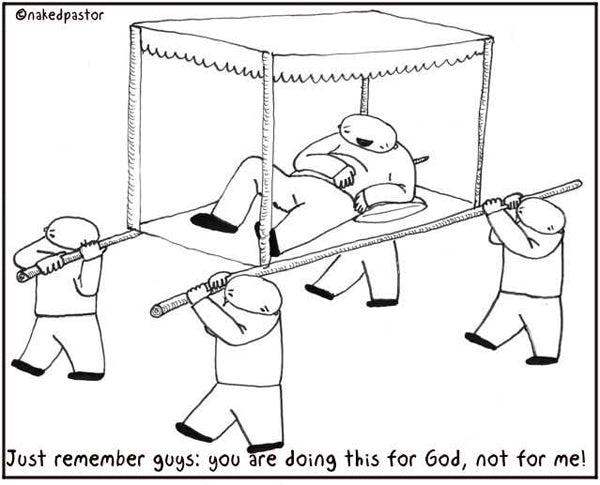

Why Faith Deconstruction Shouldn't Lead to New Labels
I talk a lot about deconstruction of faith but if you're new here lets unpack the term first. What Is Faith Deconstruction? It may be a significant change of long-held beliefs, perhaps leaving the church, and can even culminate in the loss of faith. It's called "deconstruction" because of the demolition, erosion, and breakdown of beliefs. Often I'm told that one shouldn't just deconstruct. One should reconstruct after the deconstruction. I've always disagreed with this. Why? Because a key element in deconstruction is the discarding of labels, of being pigeon-holed and categorized. You have to believe something! they say. I reply,Why? The Freedom in Not Reconstructing After Deconstruction I now claim deconstruction IS reconstruction. Why declutter only to reclutter with new clutter?Why discard labels only to paste on new ones? Why jump from one frying pan of belief into another? For me, I've discovered a very rich, deep, and satisfying life beyond belief Take, for example, a belief in God. What is beyond that word "God"? What is beyond that belief? What is beyond the thought? Did you know that you can live there with complete peace of mind? I'm very comfortable without a label, without falling into a category, without defining myself. This is not to say others are comfortable with it. But that's their problem, their need to label me, figure me out, know where to put me. So, this life beyond belief‚ free of clutter‚ the simplicity of it‚ the profound joy of it‚ the tranquility of it‚ this deconstruction down to the essential real‚ Why would I want to spoil that with some kind of reconstruction? This freedom, peace of mind, and joyful simplicity, cannot be improved upon. The Deconstruction Journey Although I'm the happiest I've ever been that doesn't mean the deconstruction journey was easy. It took me years to deconstruct. Like…YEARS. You deserve to deconstruct safely and with as much support as possible so I hope you find comfort and healing in my deconstruction art and the community that we've built together here. You can find more deconstruction resources here.
Read more
Strengthening Your Marriage During Deconstruction
Deconstruction can feel like a lonely journey. But it doesn’t have to be.I keep saying it because it’s true: Communication is key. It’s critical.It’s the cure. If you’re navigating changing beliefs within your marriage, here are some practical tips for meaningful conversations with your loved ones: Arrange a time to talk: Being intentional makes all the difference. Promise you'll try to not get defensive. Speak descriptively about your experience, not reactively. Promise you'll try to not get judgmental. Hear your partner’s perspective without evaluating it. Have drinks while you talkLisa and I have scotch and Bailey's nights. Find what works for you. Settle in for a long talk.Deep topics deserve time to unfold naturally. If you have trouble articulating where you are, just try.Even if it’s hard, trying is what matters. Determine to be honest. Share your emotions, not just your thoughts.Share your emotions, not just your thoughts. Don't be insecure. Pretend you're not emotionally invested in the other.Act as though you’re not emotionally dependent on each other’s beliefs. Trust the other is on their journey not by accident but by choice.Trust that they’re on their path for a reason. Realize it's not going to get settled today. This is a process, not a race. Why It’s Worth It Here’s what I’ve learned: Honesty is sexy. Connecting through honest communication can be very alluring. Finding compatibility at a deeper level can be very sensual. Discovering new facets of your spouse can be very romantic. Who knows where this could lead? For Lisa and I, it lead to a reboot for our marriage and our relationship‚ better than it's ever been. I wrote about it here: How My Wife and I Survived Religious Deconstructio Give it a shot! Read more about Can A Marriage Survive Changing Beliefs?
Read more
Doing Life While Deconstructing
I think the intensity of our deconstruction from religion losing our religion, changing our beliefs, deconverting, etcetera, corresponds with the intensity of the religious devotion we had. (Click on image for a digital download of it, or click HERE!) If religion was a superficial hobby for you, then deconstruction might be mild and easy. If religion was your everything, then deconstruction might be intense and difficult.For some, it's just a crossroads. For others, it's a crisis.For some, it's a slight turn. For others, it is a tragic accident. I've also experienced and observed different kinds of deconstruction: social and philosophical. That is, there is a deconstruction from the church and all that goes with it: family, friends, spouses, activities, responsibility, loyalty, spiritual abuse, etc. Then, there is a deconstruction from the beliefs we held: purpose in life, destiny, meaning, hope, afterlife, a sense of being loved, protected, and cared for, etc. Both are hard. If you do them simultaneously, good luck! Just like belief and church overwhelms your life, so does the deconstruction from them. It affects your mental health, your body, your appetite, your relationships, your sense of meaning and purpose, and your worldview. Everything! Nothing goes untouched. Just trying to do life seems impossible. It feels like we're being birthed into a new world where there is no oxygen. Nothing's the same. The trauma is total! Many don't understand those of us who experience it as trauma. So what? The important thing is to take care of yourself. One of the things you are going to have to deconstruct from is that you always have to worry about offending other people. That came with the theological and church territory. We were told that we could never ever offend anyone. If anyone was offended" by us, it was our fault and we had to fix it. That's false, and you will learn this during your deconstruction. You have to take care of yourself no matter what other people think. You have to find your own way post-church and post-belief. I tell this to anyone who talks with me about it: take your own sweet time. Do it your way. You will learn how to best take care of yourself. You are your own best caregiver. It's now time to start employing that aspect of yourself. Take care of yourself. You have permission.
Read more
Navigating a Crisis of Belief and Being Kind To Yourself
It's a crisis of belief. A crisis of faith. A crisis of meaning. Many people who are not or weren't religious don't understand. They think it should be as easy as discovering there is no Santa Claus that we should just get a good dose of reality, grow up, and move on. Maybe for some it's that easy. But for most, no. Questioning your beliefs and all you've known is hard. The reason is our religion was all-consuming. It was everything to us. It defined us, our identity, our morality, our social network, our worldview, sex, the structure of reality, history, meaning, and so much more. It's not like getting over a cold. It's more like surviving cancer. Not that I compare belief to cancer. I respect belief as a part of our maturation process. So, I don't ridicule my former believing self, and I don't appreciate it when others do either. Healthy deconstruction of faith isn't like jumping tracks. It's not a sudden change of your life. It takes time. It's a process. Yes, our minds can suddenly change, like mine did overnight. But it takes time to assimilate and integrate this inner change with our outer world. So don't let anyone ridicule or rush you. Own it and take your time.This is your journey, not theirs. Respect it and embrace it so you can get to point B and whatever that is is up to you in good condition.
Read more
Why Personal Change Can Lead to Losing Friends
I was fortunate to find churches in which I felt I had room to change and grow. However, inevitably, I discovered that I would change and grow beyond the box of their comfort zone. When you change, so do your relationships. You may lose friends. You may even lose family. Like this cartoon: 4 Reasons Why Personal Growth Can Cause You To Lose Friendships 1. They will say that you are the one who left, not them. No one would deny that personal change and growth is important. However, for many people, there's only so far they can or are willing to stretch to accommodate you. In the end, it will be your fault you lost your friends. 2. Many people are very uncomfortable hanging out with people who are not similar to them, especially in beliefs. They just don't know how to be, how to talk, how to relax and how to relate to someone very different from them. 3. On the extreme, some people refuse to fellowship with people who do not share their faith. I know that during my growth in the faith, it was emphasized over and over again that I should not mix with non-believers, except to evangelize them, because it would negatively affect me, pull me down from my heights of faith, and cause me to eventually backslide into sin. 4. Finally, when you shockingly and sadly discover the consequences of your personal change, you might find yourself branching out and making new acquaintances and friends. As I discovered, and as many of my friends also realize, this is hard work and must be intentional if you're going to succeed in rebuilding your social life. I've personally experienced this. It took me a while, first emotionally then practically, to rebuild my social life. I'm very satisfied with it now. I admire the many people I know who make put their own personal development a priority even though there are risks and costs for doing so. It takes incredible commitment and courage to accomplish, but people are doing it. Although the costs are complicated, the choice is simple: be fake in a crowd or authentic alone. But the good news is, if you work at it, you will find not only yourself but a new community of friends gathered around you. You can do it! Related Resources In this video, I talk about accepting your longing for the community and relationships that were harmful to you. You can’t overcome something if you haven’t accepted your true feelings about it. Don’t dismiss your feelings, embrace them.
Read more
Navigating Friends, Finances, and Fun After Leaving the Ministry
Friends, Fun and Finances. Lisa and I call these the 3 F's. When Lisa and I left the ministry and, as it ends up, the church in 2010, we came to the conclusion that we had some work to do on our personal lives. The reason? We felt we'd been living under a heavy wet blanket for a long time, just being Christians who were a part of a fairly conservative strand of Christianity, the Vineyard Movement. But, we had also experienced the feeling of living in a fishbowl, which obviously goes with being in the ministry. When we left, we were free! But how were we going to live free practically? We call them the three Fs: friends, finances, and fun. How Do We Make Friends When we were in the church, it provided our friends. When we left, our friendships mostly ended. It's been really hard and intentional work, but now after eight years we have friends we can call on to get together with or who call us to hang out. These friendships were earned, not awarded, and they feel a lot richer. What Do We Do With Our Finances Most pastors struggle financially. We were among them. Many Christians struggle with money. In fact, when I quit, we had filed for personal bankruptcy. I knew when I left the ministry I had a huge learning curve ahead of me of overcoming my limiting beliefs about business and success, as well as my negative attitudes about money. I think I've officially graduated from that course now. It was a tough one. How Can We Have Fun The church used to be our center of activity. Every event had a purpose, an intention, a vision, a goal, a meaning. Now, we're learning how to just enjoy ourselves just have fun without there needing to be a mission, without it needing to be a witness, or needing to be fruitful, or needing to be godly. We just have fun for fun's sake. Completely selfish. Our goal is to be happy. And‚is it ever fun! I must tell you though: this took me years to accomplish, and that's with continued therapy and coaching. How about you? Are you working on building healthy friendships, finances, and fun?
Read more
When Was Your First Crisis of Faith?
Once in a while we are shocked into a crisis of faith. Most often though it is a process. A long, steady process of losing confidence in certain beliefs. I remember when I was just a kid, very, very young. I was awakened in the middle of the dark night by a very palpable fear of death. Even though I was pretty much a Christian from infant baptism on, nothing could comfort this fear. My immature beliefs weren't cutting it. When I analyze my most traumatic crisis of faith, I can detect the seeds of deconstruction that were already there, doing their work to break apart the hard dirt of dogma. I personally believe that deconstruction... the crisis of faith and the loss of belief... is the opportunity for progress. We can't grow and mature without it. Deconstruction must happen! The smallest doubts like... Did Jonah really get swallowed by a whale?... to the larger questions like... Does God exist?... are all perfect ingredients for personal development. Whether you start early or late, it's an important journey to undertake earnestly.
Read more
What Do You Do After a Spiritual Tsunami Hits?
What do we do after the devastation of the deconstruction of our relationship to the church, our faith, our beliefs, and our religion? I watched some documentaries on the tsunami of 2004. I realised that the truly devastating part, the part where people needed the most help, was after the final blow. In this blog, I'm not talking about denial, unbelievability, unpreparedness, the extent of our pain, or anything like that. This blog is about what we do after the destruction has hit us. Take a Moment to Assess The Damage First, you have to assess the damage. You've seen the movies where people walk through devastation following a tsunami. They are dumbfounded as they look around the flattened landscape where their homes, villages, plant life, and people used to be. Pretty much everything is gone!As painful as it is, following our own deconstructions, we have to see it honestly, with eyes wide open, and look the destruction straight in the face. We have to be honest with what happened and what it has caused. There's no point in saying that nothing or little happened, that it's not that bad, or that this is manageable. It's none of those.Like nature's tsunamis, spiritual tsunamis are just as overwhelming and destructive. Because they not only catch us off guard and therefore vulnerable, but they leave us even devastated and feeling even more vulnerable. They level, destroy, and take things. They change our landscape forever.To be honest, when I went through my deconstruction, the damage was unbelievable. I still have a hard time remembering and accepting it. It did take me a while to wake up and finally assess it all. Everything had been touched: my church, my faith, my beliefs, my religion, my finances, my family, my friends, me. Everything! Decide What to Save and What to Let Go Of Now you have to decide what's worth saving and what no longer serves you. Even though it looks like a complete waste, there are things in the mess that can be saved. Underneath the rubble are things that can be salvaged. It means poking through all the mess to find a little good.When we realize everything and anything can be taken from us in an instant, every little thing takes on enormous value. It might be small, like a photograph, but how precious such a little thing becomes.There was a lot I had to throw out. There was the church I had to let go. There were people I had to say goodbye to. My relationship with Lisa changed dramatically: we had to say farewell to our naive kind of love and welcome a changed and more mature one. I had to immerse myself into a much deeper and honest kind of thinking about what I believed and what I knew to be true.It was a crisis of faith. There were a lot of beliefs I allowed to go. There were a lot of things I thought which needed work. Some things survived but needed repair or upgrading. As brutal as tossing things might feel, saving things feels hopeful and somehow redeems the process. Begin to Rebuild Your Life Now we must make a new life. Everything has changed, including our spirituality. This is the costly but fun part. Unfortunately, what happens in some tsunami-devastated areas is that the villagers are encouraged to move to "safer" places. Resorts move in and take over the beachfront property. The displaced people struggle to feel at home again. We see this sometimes too with some people after deconstruction: they reject everything and move away to start a brand new life all over again in a different place. Although I'm not saying this shouldn't be done, I am saying it doesn't have to be. You can rebuild where you are.You can be spiritually transformed where you are. You don't have to leave your church, you don't have to leave your faith, belief or religion, and you don't have to leave your partners and friends. Even though with some of these we might not have a choice, often we do and can renegotiate our relationships with them. I can say that I'm happier now than I've ever been. I'm also more sober. What I mean is I'm more serious, as in mature or wise. Lisa and I were talking about this recently. I posted a Facebook picture of Lisa and I leaving on our honeymoon. We were talking about how innocent and wide our smiles were. We wondered if we ever smile like that now. Lisa suggested that we do smile large now, but there is experience behind them. Lots of history. We also agreed that we want to continue moving on in our rebuilding project, that our home is not yet totally completed. We want to get to the place where the devastation is well behind us and we approach life with joy again. We're almost there because we intend to finish this well. Proceed At Your Own Pace I know we are all in different places on our spiritual journeys. Some of us are watching the tsunami coming, some of us are in the middle of it, some of us are just realizing it has happened, and some of us are past it. So take this post as a way to prepare, a way to survive, or a way to figure out how to move forward.
Read more
Reverse is a Legitimate Gear in Spiritual Growth
Reverse is a legitimate gear in spiritual growth. In fact, all the gears are at some point or another for some period of time. We must know by now that our personal and spiritual growth is never linear, but often cyclical and sometimes could even look like the scribbles of a child. Let's talk about reverse. Or relapse. I've not only observed it in others. I've experienced it for myself! That is, I will go through a kind of deconstruction of a belief. Sometimes I react to a belief I no longer feel can hold up. I'll go long in the other direction. Then, after my anger or frustration or sadness or disappointment or rebellion is over, I often come back to a more reasonable, rational, and less reactionary posture. I think this is normal. I've seen it in some, however, where they relapse to an even more conservative position than they were before‚ probably to protect themselves from ever approaching that dreadful line in the sand again. They don't like how deconstruction feels, so they avoid it at all costs. But, this is a reaction too. What I help people do is to experience and exercise their own freedom. They can end up wherever they want‚ without shame, fear, or guilt. That's the goal! Your own personal freedom and your enjoyment of it. Whether you end up a believer or an agnostic or an atheist‚ this is secondary to me. What is primary is your personal spiritual independence. That's it. So don't worry if you're constantly ebbing and flowing in what you believe or don't believe. This is as natural as the tide! Just observe. Just enjoy. Just relax. Because you are not the tide. You are the ocean!
Read more