The Naked Journal
Thoughts, musings, and meanings behind NakedPastor Art.
The Naked Journal

Have You Ever Been Shunned After Leaving The Church?
I’ve experienced this a few times after leaving the church, and I know many others have too. It’s called shunning. Some churches openly acknowledge it as “shunning,” while others shy away from the term because they believe it sounds unkind. Instead, they cut people out of their lives completely, leaving them with no connection or support. What’s the difference? Just a matter of semantics. Two women pass each other in the grocery store. One says, “Sally?! What do you mean, “Excuse me, who are you?”? I only left the church last month! When I’ve left the church, I often felt like they viewed me as someone who had catastrophically and cataclysmically backslidden into unforgivable error. They seemed to think I had demons or that I was contagious. Has this happened to you? If you want to read more about the emotional impact of losing church friends, check out my post, “Have You Struggled With The Pain Of Losing Church Friends?”.
Read more
Growing Together With Humor When Deconstructing While Married
Change is a natural part of life, and when we grow, our relationships change too. Changing your beliefs changes your relationships. Change and others must adapt if they want to stay in relationship with you. Same for marriage! If you change, your partner must change. If your partner changes, then you must change. We learn to adapt to the other, give them room to grow, and provide a safe space for their transformation to unfold. But it’s important to have fun along the way. I call this cartoon, “Streaming or Steamy Church”. Lisa and I found that as we grew and changed it made it easier and happier if we could be lighthearted and even make fun of ourselves. Laughter is good medicine. This doesn’t mean we despise, ridicule, or shame our earlier lives. Rather, we hold our former selves with compassion as part of our story. We would not be who we are now if we hadn’t been who we were then. The fact that we can look back with gentleness on where we were and how we got here is affirming, liberating and joyful. Lisa was 19 and I was 22 when we got married. What did we know?! In our youthful Pentecostal naïveté, influenced by toxic purity culture messages, we wrestled with sexual and relational questions that are immaterial now. Even though we enjoyed each other, we were far too serious in our ardor for what was righteous. We had some self-liberating to do! So, we laugh! All beliefs must be falsifiable if they are to be taken seriously. Armed with this attitude, we can enjoy them as they are: provisional attempts to apprehend and articulate the deepest mysteries of an abundant and joyful life! This is an adventure almost as exciting as exploring one another’s bodies. Navigating spiritual deconstruction in marriage is never easy. It forces us to ask, can marriage survive a change in views on faith? With love, mutual respect, and humor, it just might. If you enjoyed this blog post you might enjoy this one, 3 Reasons to Joke About Spirituality. Related Blog Posts What is Deconstruction of Faith?How My Wife and I Survived Religious DeconstructionStrengthening Your Marriage During Deconstruction
Read more
10 Reasons Why it's So Hard to Leave the Church
Addictions are hard to break, including church. Some of us already know this. Now, the rest of us will. Fear Of Hell The fear of going to hell gripped me when I left. Did I leave God and God’s people? Does Satan own me? Am I going to Hell? We learn this isn’t true. Loss of Community I lost not all but most friends. We must learn how to make new ones while grieving the loss of old ones. It's complicated and a journey. Read more in this blog post, When You Miss the Community of Church Inspiration It’s inspiring to gather, learn, and sing together. I got refueled for the next week. Learning how to do that by yourself is a new skill Music I love music. My worship band loved playing together. I haven’t played my guitar since I left nor listened to worship music. Too much “ick”. But time heals. You can read more about this in my blog, I Used to Make Worship Music and Now I'm Triggered by My Guitar Support When we struggled, people helped with food, money, babysitting, cars, prayers. Now we’re self-sufficient Destiny My life had purpose. I had a destiny! That’s gone but meaning is deeper. Validation I felt I was doing good. I had assurance I was saved, blessed, and on the right track. Now we develop self-confidence. Boredom At first I felt delinquent. Now I love Sunday mornings. Church is like family with 24/7 demands. I’m now self-directed and don’t depend on others to occupy myself. Children Our kids are now adults. We never slammed the church with them, but they knew. They also know we’re not enemies of the church. They’ve developed their own spiritualities. Inclusion Many think I hate the church. I was criticized for biting the hand that fed me. Now I’m criticized for challenging something I’m not part of. Can’t win! Do you relate?
Read more
Finding Beauty in the Constant Transformation of Beliefs
I live on the Kennebecasis River. It’s deep, wide, and beautiful. It changes every day. It’s constantly moving with constant impact on its surroundings. Every day the same river. Every day a different river. It’s never embarrassed with its changes.Because it always possesses its river-ness. One of the things I’ve noticed in my crazy, unpredictable, changing spiritual journey, is that I constantly confuse people. They complain that they can’t categorize me. They get frustrated that no two days am I the same. Some days I’m like a calm believer and some days I’m like a stormy atheist. They can’t nail me down. But I don’t let that bother me. I don’t stress about it. I don’t care. Because, like the river, I’m constantly transforming. Every day, something different to behold! Sometimes as gentle as can be. Other days as rough as can be. But I don’t care. Because I never lose my river-ness. Beneath all your changing beliefs is the depth of a fluid you. Besides, who is this “you”? Who is this “me”? I’ve question even that. That, for me, has become a very fluid, flighty, and impermanent thing. Fluid! Because what’s most important is not consistency of belief, but consistency of freedom and independence. Don’t be embarrassed by your different manifestations that reflect your changing thoughts that express your transforming mind that display your deep and fluid self. Be the river that you are. Fluid! You’re terribly beautiful! Every day!
Read more
Marriage, Deconstruction, and Contempt
The most precious thing I nearly lost during my deconstruction, changing my theology, leaving the ministry and the church, was my marriage to Lisa. We better now than ever. But if we weren’t prepared, we might not have survived the crisis. (Not to say that all marriages should stay together. Sometimes divorce is the best solution. Just because you are married it doesn’t you should always be or that if you get divorced you failed.) John Gottmanm, in, "The Seven Principals for Making Marriage Work", says there’s one principal that will break a marriage. He can determine whether a couple will divorce or not in under 5 minutes with them. The one thing that will split up a marriage faster than anything is contempt. If Gottman detects this in the first five minutes of a session with a couple, he predicts they’ll divorce with 91% accuracy. It’s challenging to allow your partner to grow at their pace while they let you grow at yours. To be different. Lisa and I used to be on the same page. But then our theology changed and we struggled with ministry. Our bond strained. We felt we were no longer on the same page, or the same book, or library! But time taught us that we were in the same story. Our story proved that we can grow together. Our relationship is richer for it. We avoided the deadliest pitfall: contempt. We maintained mutual respect, even though we struggled with one another. I entrusted her to her own journey. She entrusted me to mine. We hoped we would eventually feel like we were sharing the same story. It worked.
Read more
The Courage To Ask: What If God Doesn’t Exist?
I help people transition through faith deconstruction through my cartoons and writings. For many, the scariest part of this ride is when the question of God’s existence arises. I comfort and encourage them not to be afraid. Look: if God exists, then this is obviously a necessary and healthy component of the transformation into a deeper wisdom concerning God. If God doesn’t exist, then you are freeing yourself, though painfully, from an illusion that brought temporary but artificial comfort. But, I also suggest to them a third way, a middle way, between these two extremes. I promise them that if they persevere, they will learn to live within the inevitable human tension of unknowing… a place where they can rest within the question without fear and with perfect peace. Go ahead. I dare you. Ask the question.
Read more
The Process Of Questioning Your Religious Beliefs
Why Questioning Your Beliefs can be so Scary Questioning your beliefs can be scary. Terrifying! It's not just like notbelieving in Santa or the Tooth Fairy or Unicorns. Our beliefs about God are deeplyenmeshed with the meaning of life and our reason for living. These beliefs are foundational!Our beliefs mean everything to us. That's what inspired this cartoon, That's what inspired this cartoon. Questions Can be Scary. We instinctively know that when we start to question our beliefs it's going to change everything. Our family, friends, and partners know this too. The pressure's on. Will we allow this to happen? Or is it going to happen to us? That's what inspired this cartoon, Turn on Questioning Your Beliefs What did you do? Did you flip the switch?What will you do? Will you flip the switch? Advice For Questioning Your Religious Beliefs Don't let others... or yourself!... shame you for feeling afraid. This is real! Talk with peopleevery day who wrestle with this fear. It's real. I encourage people to let the questions come.Don't deflect them. Don't ignore them. Let them live with you. You'll get used to them and, maybe like me, you'll find peace of mind in spite of them... in fact, because of them! It can feel very agonising to question and rethink your beliefs. Now... there may be people outside of your head who will continue to think and maybe even dare to say these things. But don't let them in! You're fine. You're okay. You're perfect. What Is Deconstruction I talk a lot about faith deconstruction in my art and writing. Deconstruction is the process by which people rethink their faith or previously held beliefs. There is no end point for deconstruction. Your faith could get stronger or you could abandon it altogether. If you're questioning your beliefs I think you'll find healing in my religious deconstruction art. You Can't Predict Where Questioning Your Beliefs Will Lead You As we enter deconstruction, we comfort ourselves by declaring there are some beliefs that are non-negotiable for us... like believing in Jesus or the existence of God or... whatever beliefs are most precious to you. We prevent ourselves from becoming to frightened by assuring ourselves that we will only go so far and no further. We're willing to take risks, but not too great a risk! I always smile inside when someone shares their deconstruction trauma with me and they insist that they will never forsake this or that belief. "Well, fasten your seatbelt!" I think to myself. I don't think it's wrong to make such declarations. Coping with trauma has many options and variables. But real growth must mean being stretched beyond what we have seen, what we've experienced, and what we know. We don't have the thoughts or the words to describe where we have not yet been. My advice? Try to relax. Acknowledge the fear. But don't let it cripple you. You are growing and you will come to an even more beautiful place. Enjoy the ride! If you'd like more support, I wrote a book, Questions are the Answers to help people throughthis journey.
Read more
The Unpredictable Journey of Finding Yourself
Those who assume authority over us and those who hold our community memberships can be tricky with their language. Yes, you’re allowed to ask questions. As long as they are the prescribed ones.Yes, you’re allowed to search. As long as you find what we planted.Yes, you’re allowed to find yourself. As long as you become a person we can accept. The danger with questions, searching, and finding ourselves…is that we cannot predict how things will turn out. We cannot anticipate the answer.We cannot determine what we find.We cannot stipulate what we become. I’ve counseled a ton of people who want a certain answer.They want to find what they’re looking for.They want to be a person they fantasize about. The truth is true growth is truly scary and completely unpredictable.Spiritual growth scares people because it demands surrender to the unknown.It is a treacherous, though rewarding, journey into the complete unknown.It is a deep-dive into unfathomable mystery where the best treasures are buried. Take that trip!Find yourself.Pay the consequences.Because it’s worth it.All of it.
Read more
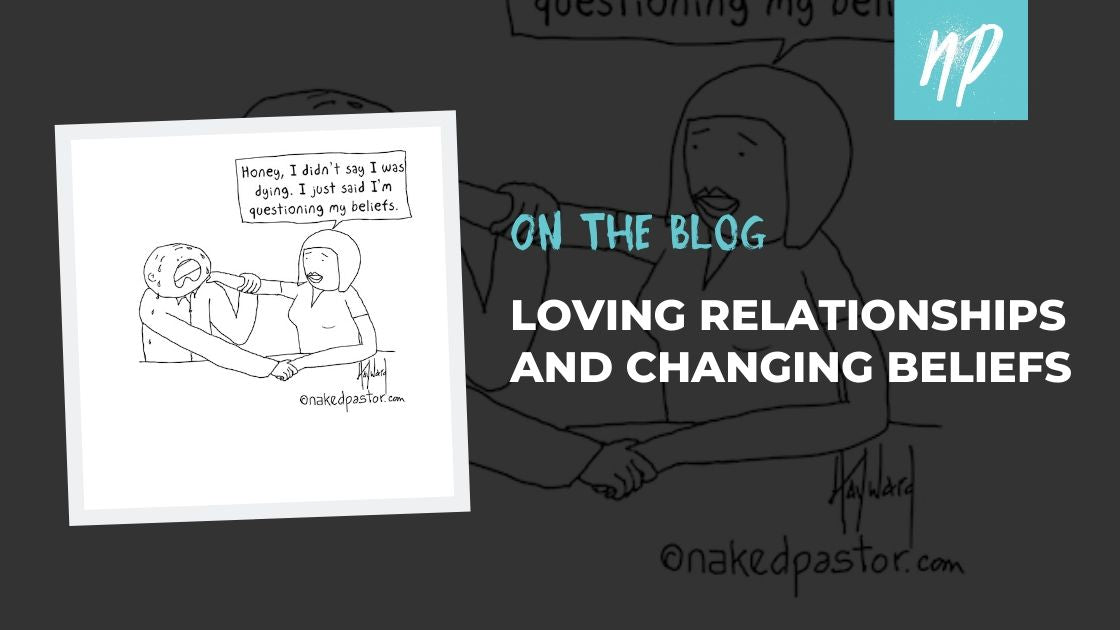
Can A Marriage Survive A Change In One Partner's Religious Beliefs?
This post is sad but it’s real. Buckle up!When faith deconstruction strikes a marriage it can be devastating. By deconstruction, I mean the changing of spiritual beliefs, the loss of faith, or leaving the church. By strikes a marriage, I mean when one or both partners experience deconstruction.I am not going to sugarcoat the reality. My observation is most marriages don’t survive when one partner changes their belief system. I get messages from people all the time who are struggling in their marriages and relationships because they have changed their faith or religious beliefs. One thinks it's still okay to believe in God and the other thinks it's stupid to. One still loves the faith and the other hates Christians. One is perplexed by what they think is their partner’s naïve beliefs, the other is perplexed by what they think is their partner’s dangerous unbelief. So their relationship falls under strain, and they may end up separating and divorcing. This not only happens in marriage but in all our relationships. When Lisa and I started deconstructing our faith and beliefs well into our marriage, we had no idea what to expect. We had been madly in love for many years. We met in Bible College and served churches as a team for a long, long time. Our marriage almost didn't survive when I left the ministry. Feeling suddenly free from all limitations, I began being more authentic about my spirituality. We felt we were no longer on the same page, or the same book, or library! But time taught us that we were in the same story. Our story proved that we can grow together. We learned that compatibility of beliefs wasn’t the glue of our marriage. Love and the mutual respect love fosters was! Our relationship is richer for it. Here are 5 reasons why many marriages don’t survive spiritual deconstruction 1. They realize the only reason they got married was to have sex legally. They wanted to have sex, but the only way was to get married. Now, years later and starting to question everything about the faith and the church, they admit getting married just to have sex isn’t a good enough reason to stay together. Especially if sex is no longer an important part of the relationship. 2. They discover that they’re not really in love. They thought they were in love because of pressure from the church to behave as though they were. It takes a lot of self-awareness and honesty to say, “You know what? I don’t love him/her. I never really did!” Once they can admit that, then they realize there’s no reason to keep trying to make this work. 3. They conclude that it’s not worth the effort required to fix it. They realize they’ve changed so much and that they no longer feel compatible. Sometimes people realise that the person they are with is not the person they married, and they don’t have the energy or the time to try to fall in love with this version of their partner! They feel so out of sync with each other that the happiness is gone and there’s no point in continuing. Unfortunately, this happens. 4. They want to leave anything to do with their religious past. This may include their spouse. I’ll be honest with you: this was one that nearly broke up my marriage. I wanted to run from everything. I escaped religion and the church, abhorred the thought of feeling trapped, and considered walking away from my wife, my family, my home. Everything! It was one of the most confusing times of my life. Some don’t survive this impulse and do leave everything associated with their past, including their marriage. 5. They decide they got married too young. They've never known anything but married life. Some people who get married very young feel they have never colored outside the lines, and were never allowed to live authentically without being responsible to or for another. Related to this are people who discover they’re not monogamous or heterosexual or their assigned gender, etcetera. Often the woman decides she will longer participate in a misogynist or sexist relationship. Many go their separate ways in order to live their own way, something they’ve never done before. Only you can decide if your marriage is worth saving Sometimes, when deconstruction hits you and you change your beliefs, you might realize that you were never really in love in the first place, or that your love has died, or that the pressure and expectations of your church forced you to marry and stay together even though it wasn't right. The veil lifts, you see your marriage for what it is, and you decide that it might be better to go your separate ways. This is not failure. It’s self-awareness!Sometimes divorce is, sadly, the better option. However, a huge part of the problem is the stigma of divorce that survives in our minds from our religious days. In your mind, you think: God hates divorce and I should suffer long even in a terrible marriage because that’s always better than divorce. But, I do not judge anyone going through this or for the decision they make. Religious deconstruction is always messy. It’s never clear or clean.If you want to end your marriage, do it as well and as kindly as you can. The goal is the personal well-being of each person and taking the steps necessary to make sure that happens. If both partners want to make the marriage work, it’s not easy but it can be done. Ask me, I know! Here are 5 ways you can help your marriage and yourself survive spiritual deconstruction Don't be rash. When you were on the same page there was no need for patience. You had what you wanted: one hundred percent agreement. But as each person in the marriage begins to grow, mature, and change, disagreement is bound to and ought to occur. When one partner in a relationship changes, it forces the other to change. Marriage is like a crucible of transformation. We influence and change each other. This is what love does, actually. We make compromises (translate: improvements) in order to make our partner happy and our relationship more pleasant. So, when our partner starts to change, don't prematurely and immaturely dash out the door and abandon your partner or the relationship. Give it time: they will change again and so may you! Don't compromise too much. This one goes against a lot of info out there but it needs to be said (it’s also why it’s a longer section than the others). If your partner can no longer tolerate you, gives you ultimatums, or gets impatient and angry with you, and decides to leave, that's their problem, not yours. Their attempts to pressure you into a certain way of thinking is controlling and unfair. You didn't require that of them, and they shouldn't require it of you. The best and healthiest growth is natural and unforced. Everyone knows that. So don't compromise yourself too much by becoming what they demand you to be just so they'll be happy and stay with you. It's not worth it, because you are more important than the marriage. What I mean is, the healthiest relationship is between two consenting adults who don't manipulate or coerce one another. When you promised to take one another in sickness and in health, this meant spiritually too. So if they can't love you as you are right now, and as you are in your own spiritual process, then that's their problem, not yours. Don't sacrifice your essential self on the altar of their selfish insecurities and fears. Stay open-minded and curious rather than judgemental. As adults mature, they begin to understand what true love is - a safe space to grow individually without judgement. You don’t need to understand your partner’s religious beliefs or even agree with them to show your partner respect. Instead of pushing to shift their perspective, lean into curiosity. Ask, listen, and really try to see where they’re coming from. It’s not about winning an argument or being right— it’s about opening a door to deeper understanding and letting your connection grow stronger. Realise you are not alone in this and it’s not wrong. Thousands of couples navigate the complexities of different religious beliefs every day. There’s nothing wrong with you or your partner; it’s just part of the journey. There are plenty of resources out there, from books to professional counselors. Seeing a therapist can make a world of difference. But, a word of advice, look for someone impartial, who understands both sides without taking one. If you get a counselor who shares one partner’s faith, the therapist will struggle to stay neutral and focus on helping you grow together. Love with humility and respect. I was going to say love means tolerance, but tolerance has the ring of superiority to it‚ like, because I am right and you are wrong, I will tolerate you in your error until you finally see the light like I did and come around to my way of thinking! I definitely don't mean that. I mean love is humble and doesn't think of itself too highly. When we acknowledge that life is full of mystery, and all knowledge, beliefs, theories and conclusions are transitory and provisional based on incoming information, we can be humble about our own beliefs and respectful of our partner’s. Good scientists take this approach. Good partners do too. In mature, loving relationships, there’s a mutual respect that goes deeper than held beliefs. That is, we must trust our loved one to take care of themselves intellectually and spiritually. The beliefs are just thoughts rippling on the surface of a deeper reality called the self, and we trust their self to their own search and discoveries. When we trust each other and leave our insecurities and fear of judgment aside, we can discover a whole new and more authentic version of our relationship that is deeply rewarding. But only if we are brave, patient, honest, and open-minded. More resources for marriage and deconstruction of faith You can read my personal story on this blog post - How My Wife and I Survived Religious Deconstruction.You can watch this video, with Monica Alhbin from the G(ud)-Punkten podcast, where I talk about the terrifying experience of not knowing if my marriage would survive spiritual deconstruction. You can read my book, Til Doubt Do Us Part: When Changing Beliefs Changes Your Marriage.
Read more