The Naked Journal
Thoughts, musings, and meanings behind NakedPastor Art.
The Naked Journal

SAYING YOU’RE ACCESSIBLE AND BEING ACCESSIBLE ARE 2 DIFFERENT THINGS
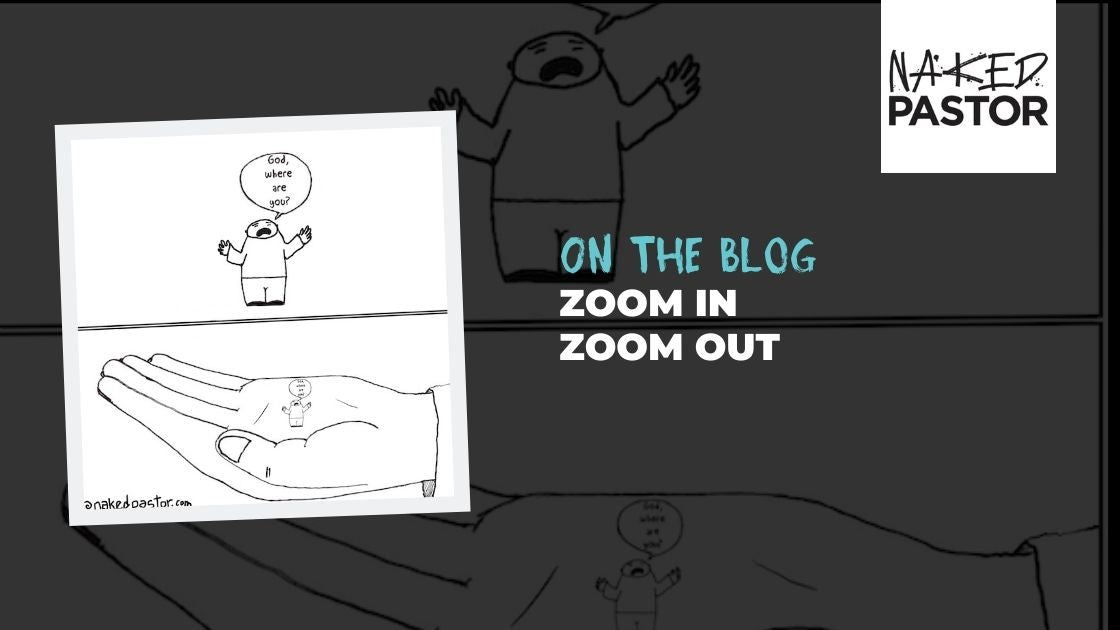
SAYING YOU’RE ACCESSIBLE AND BEING ACCESSIBLE ARE 2 DIFFERENT THINGS A door has a sign on it, “We Welcome Short People”. Short people are trying desperately to reach the doorknob but can’t while people inside look fearfully at the short people trying to get in. It’s one thing to say you’re accessible. It’s another thing to actually be accessible.People with disabilities know this. By experience. It’s like churches that say they’re affirming. They say they’re affirming but they’re really not. LGBTQ+ people know this. By experience. Every once in a while I hear from someone who’s found a church that accepts them… a church that is totally accessible and affirming and welcoming and inclusive and MEANS IT! It’s not just engraved on their sign but on their hearts as well. So beautiful! These are precious gems in our universe. They are like priceless diamonds in our world. And they are precious and priceless precisely because they are rare. Be like these churches. (Did you know many of my cartoons are available as prints? I even have some original drawings available too.)
Read more
5 Stages Of Faith Deconstruction
Religious deconstruction is all about taking an honest look at the beliefs, doctrines, and practices you grew up with and breaking them down to see what still makes sense to you. Faith deconstruction is not as uncommon as you would think, although many suppress their changing beliefs or don’t voice them because they are scared of judgment or of losing faith-linked friends, family and community. Why religious deconstruction can feel like death Spiritual beliefs are a fundamental anchor to reality and our perception of the world. So when we shed them, it’s like death. And where there is death, there is grief and, eventually, rebirth. I’ve been through countless ups and downs on my journey toward spiritual freedom and authenticity (you can read how it all started here). To try to help other people who are on this same path, I’ve adopted Kübler-Ross’s 5 stages of grief and applied them to spiritual deconstruction. The Stages of Deconstruction Digital Cartoon Also, I have to tell you that the stages of religious deconstruction are not always linear. And each stage also has mini-stages within it. Life, people, thoughts, and growth are not always neat, tidy, and predictable (which is beautiful, actually). 1. Denial of our doubts In the first stage of religious deconstruction, we try to ignore what is happening. We’ve been faithful believers, and now everything is crumbling. It's like cancer—we can't believe it's real. We may deny that our beliefs are changing, but they are. People often deny their changing beliefs because they don’t want to think about it; it's easier to avoid the discomfort. There's also the fear of being judged by others, especially by family and friends who might not understand. Questions lead to more questions, and that uncertainty can be overwhelming. Plus, many of us were taught that blind faith is the good kind, so admitting doubt feels like a betrayal of everything we've ever known. 2. Anger with ourselves and the church In the second stage of religious deconstruction—anger—we find ourselves furious with the church or with God for not helping us. We feel abandoned and let down by the very institutions and beliefs we once trusted. There's also anger directed inward, as we blame ourselves for not being "good" believers anymore. We thought we were better than this, and backsliding wasn't part of the plan. How could this happen? This frustration stems from a sense of betrayal and confusion, leaving us questioning the very foundations of everything we’ve ever believed..Bargaining We try to figure out another way to be a believer. We might promise God we’ll work harder at being a good Christian if God would just restore our faith. We look for alternatives. Liberal? Agnostic? New Age? We’ll figure out how to fix this! 3. Bargaining with God and trying to fix our faith In the third stage of deconstruction—bargaining—we desperately try to find another way to hold onto our beliefs. We might promise God that we will work harder at being a good Christian if only our faith could be restored. It’s a frantic attempt to regain some sense of control and certainty, as we think, "We’ll figure out how to fix this!" We might even try different versions of Christianity or church or other spiritualities to help us feel like we’re still okay. This stage is filled with negotiations and compromises as we grapple with our guilt for being “a bad Christian” and the loss of our former beliefs. 4. Depression and mourning our loss In the fourth stage of deconstruction—depression—things feel the darkest. This is when we realize we can’t go back and we don’t want to go forward. We’re stuck in a desert of doubt and fear. We face the death of our beliefs and our spiritual life as we knew it. Is this life now? Everything we enjoyed and found comfort in is gone, leaving us to gaze into a bleak future with no appealing options. It's a time of profound sadness and loneliness, as we mourn the loss of our former faith and struggle to find meaning in what comes next. Acceptance of our true beliefs Acceptance is a welcome relief from the struggles of faith deconstruction. We accept our beliefs have changed and our faith is dying or transforming. It’s not giving in to fate, but neither is it necessarily joyful. Just a serene acceptance of what is. This is a transition into a new way of being. Each moment is treasured. It’s a tranquil and wise phase. You face your future with dignity, poise, and a sense of fullness. Deconstruction is not bad. It’s growth into a deeper spirituality and a more beautiful way of living. It’s personal growth. It’s not easy but it is worth it in the end. Going through Christian deconstruction and need some support? It took me years to deconstruct. Like…DECADES. And in that process, I learned a lot. I believe that everyone deserves to deconstruct safely, without judgment, and with as much support as possible, which is why I've decided to share my deconstruction course for free on YouTube. You can watch all the videos now starting with this one. You may also want to join my online community of people experiencing deconstruction too… www.thelastingsupper.com
Read more
Two Kinds of Deconstruction
Over the years of deconstruction as well as assisting others through theirs, I’ve discerned two kinds of deconstruction. One is deconstruction from the church.Two is deconstruction of belief. A dog with a sweater on that says, “BELIEF”, follows a woman leaving a church who turns and says, “GO HOME!” People leave the church for many reasons. They could be bored, or conclude the church is irrelevant, or are disappointed in the church’s lack of justice, or its greed, or they disagree with its teaching, or they experienced abuse there. However, they may not experience a deconstruction in their beliefs. In fact, many become more fixed and fundamentalist in their beliefs. Many have left the church because they believe it has strayed from its purest primitive origins in its teaching, liturgy, polity and practice, and crusade to restore its former glory. However, people deconstruct their beliefs for various reasons too. Usually its some kind of trauma (spiritual, psychological, emotional, physical, social) that provokes deep doubt and instigates a burning uncertainty. Usually, these people end up leaving the church, either because the church doesn’t provide room for spiritual trauma and upheaval, or because the church no longer makes sense in their new paradigm of doubt, uncertainty, and mystery. For many, the church is not a safe space for spiritual growth beyond traditional orthodoxy. I pictured this cartoon while on my run and had to draw it because belief is like this. Even though we experience radical changes in our lives, ones we’ve made or ones that happen to us, belief can tag along in weird ways as we renegotiate our relationship to it. But that’s okay because this is a journey and we learn as we grow.
Read more
My Manifesto for Spiritual Independence
What launches you on your own spiritual journey and separates you from others is the simple but revolutionary act of asking a question. The question is what separates you from accepted doctrine. Before, you were entangled and in a codependent relationship with a theology. But raising a question expresses your doubt in its truth claims. This is where deconstruction begins. Once you accomplish this first daring step, you are on your way to spiritual independence. Cartoon description: While one man is anchored to the ground tied to a stone exclamation mark, another man rises into the air holding on to a huge balloon shaped like a question mark. I wrote this manifesto for my intimate online community of questioners, TheLastingSupper dot com (you’re welcome to join), to articulate our unique journeys and our spiritual independence. You can use this if you want. My Manifesto For Spiritual Independence 1. I am free. I always have been. I always will be.2. I have the right to ask questions as a way to become wise. 3. It is my right and responsibility to find my own spiritual path.4. It is my duty to myself and others to remove the log from my own eye first.5. I take care of myself before I care about labels or what others call me.6. It is necessary for me to be true to myself before being true to a community. 7. I recognize my roots but will not allow them to prevent me from changing. 8. I embrace my unique spirituality and will let my light shine for others. 9. I take charge of my life and will live it wisely, compassionately, and joyfully.10. I am spiritually independent! Share it if you want.
Read more
Things I Would Say to People Who Are Deconstructing Their Beliefs
It’s often traumatic to deconstruct your beliefs. Here’s some comfort. Don’t worry about the past, the future, or the present. You may have regret or shame for how you believed and behaved in the religious culture you were deeply enmeshed in. Accept your roots and integrate the earlier chapters of your life into your present self. This is not to say you must believe or excuse your earlier beliefs. You just learn to write the past into your story. You wouldn’t be who you are now unless you were who you were then. Like an alchemist, transmute the dross of your past life into the gold of your present one. Don’t worry about the future. There’s no condemnation, judgment or punishment for questioning, changing, or losing your beliefs. Just like I would never reject my children for believing differently than I, neither do we live in a vengeful universe that retaliates for a different wisdom sought with integrity. Relax. Be at peace. Do not fear. It is well. Don’t worry about the present. You’re now liberated from a life of constant monitoring and measuring. You’re free to be here now. Space and time are concepts; we live in an infinite chain of “now”s. All you have is now. This is the fulness of time, the infinite and the eternal, and you can be in it just as you are, authentically, honestly, vulnerably, and joyfully, right now. You are not alone.You are not crazy.You are not backsliding.You are growing.As you should.Enjoy it.And love yourself for it.I do.
Read more
Privilege or Sacrifice: What Does the Cross Truly Signify?
When you already have everything in this world as a privileged person, all that's left for Jesus to give you is good feelings, more success, and a prominent seat at the banqueting table in Heaven. The cross has simply become a tool for personal gratification and nothing more. But what about those who do suffer? What about the disenfranchised, the disinherited, and the dismissed? Cartoon Description : Jesus hangs on the cross. He's thinking, "Some are just going to use this as a means to secure their privilege, while the disenfranchised will see this as a defiant undermining of that privilege." For them, the cross is a symbol of what it costs to challenge the privileged, the payment for standing up against those in authority, for resisting those in power and their self-centering agenda, and demanding that all people, all people, enjoy equal rights and privileges. For the privileged, Jesus suffered so that we don't have to.For the disenfranchised, Jesus also suffered to show us how.If you enjoyed this blog post, you'll enjoy my similar post, God, Privilege, and the Uncomfortable Truths We Avoid which I wrote after the kick I received when posting this cartoon.
Read more
Deconstruction: Then and Now
My Journey of Deconstruction. How it started: A snake-like question mark sits on a bed scaring a man under the covers. Next frame, the man and question mark are arm in arm, in love. There are questions that are permissible. These questions confirm and sustain the system. Q: "How did God create the world in six days?" A: "Because God is omnipotent!" Q: "Can you explain the Trinity to me?" A: "Like an egg... white, yoke, and shell!" Q: "How can I get to Heaven?"A: "Repent of your sins and believe in your heart that Jesus is Lord!" Then there are questions that are forbidden. These questions may challenge and undermine the system. Questions like: "What if we've got it all wrong and we're cooperating in a grand delusion?""If there's no proof of God, why do we act as if there is?""Could Christianity be like other religions... an attempt to apprehend and articulate reality codified in scripture and organized as an institution?" Existential questions are scary. But when you finally see that we all live within one reality and that our various and diverse ideas and explanations about this reality are just thoughts and words spinning around this one reality, then you may feel less threatened by these questions. In fact, they may become intriguing to you. You may even fall in love with them. You might even move in together and live happily ever after!
Read more
Recognizing The Changes Associated With Shifts Your Beliefs
We all unravel our beliefs in our own way. That's why I champion spiritual independence. Focus on being yourself and find your own path. A man on a couch depressed. His wife on the phone: “Sorry, he can’t come to the phone right now. He’s losing his religion.” Mental, emotional and social symptoms you may experience when Mental Changes Deconstruction usually starts in the mind, often initiated by trauma: an event that provokes doubt. It can be as simple as questioning the Bible, or the loss of a loved one that makes you question a caring God, or frustrating experiences in the Church or with religious people. A Doubt Virus lodges in your fevered brain that spreads, overtaking your certainty. Confusion sets in. Emotional Changes When you’re immersed in a religious culture but start questioning it, you experience withdrawal and grief. You may feel a mixture of sadness at the prospect of loss and elation at the hope of freedom. Confusion creates stress that you feel in our body. You’re stuck between sadness and joy, conflict and peace, control and freedom. You count the cost of taking the next step because the risk feels high. Social Changes You’ve become suspicious about submitting to authority and believing ideas unquestionably. You know you’re in for a bumpy ride as you contemplate breaking away from the Church, its leaders, and your peer group (family and friends), all of whom perpetually monitor you. You know if you take a stand for your spiritual independence you may find yourself all alone. Your social life will change. But have hope! Because I know you will progress beyond confusion to peace of mind.You will finally feel authentically you, happy and free.And you’ll learn how to navigate your present relationships and form new and healthier ones.
Read more
How it Started How it's Going
In the first frame a group of people are gathered around Jesus as he gently teaches. It says, "How it started." In the second frame people are gathered around the American flag worshipping it in front of a church. It says, "How it's going." Nationalism is not just an American problem. We're seeing it around the world. I'm also seeing it in Canada, where I live, where some believers believe Christians should rule the country with their fundamentalist beliefs and are working and praying hard to make this happen. We can say the problem is patriotism. But it's deeper than that. It's that some people are convinced theocracy is best.
Read more